


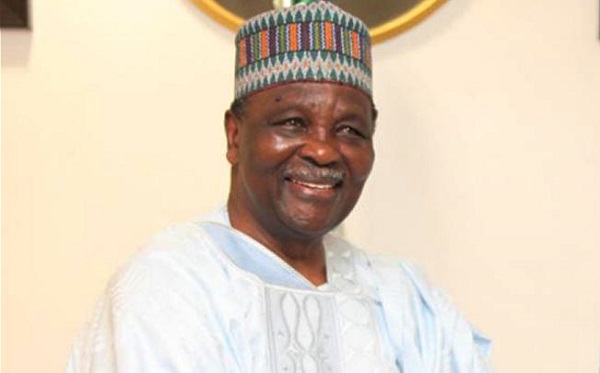
Former Nigerian Head of State, General Yakubu Gowon (retd.), has revisited the controversial Aburi Accord, stating that its collapse was due largely to what he described as Chukwuemeka Odumegwu Ojukwu’s insistence on regional military control—a demand Gowon said was incompatible with national unity.
In a wide-ranging interview on Arise Television on Wednesday, Gowon provided fresh insights into the events that followed the January 1967 peace summit in Aburi, Ghana, which was convened to prevent the escalation of Nigeria’s political crisis following a series of military coups and ethnic tensions.
Background: What Was the Aburi Accord?
The Aburi Accord, reached between January 4 and 5, 1967, was a last-ditch diplomatic effort to forestall a breakdown of national unity following pogroms in Northern Nigeria, the fallout from the July 1966 counter-coup, and growing secessionist sentiments in the Eastern Region under Lt. Colonel Chukwuemeka Ojukwu.
The meeting brought together top military officers and leaders from Nigeria’s regions, with Ghanaian leader Lt. General Joseph Ankrah acting as host. The broad understanding reached was for a loose federation, giving each region control over its own internal affairs.
But ambiguity around military command structures, the implementation framework, and diverging interpretations of the agreement led to an impasse—and ultimately, the Nigerian Civil War that broke out in July 1967.
Gowon’s Account: Misunderstanding or Manipulation?
According to Gowon:
“As far as we were concerned, we just went there to meet as officers and agree to get back home and resolve the problem. That was my understanding. But that was not his (Ojukwu’s) understanding.”
Gowon claimed he fell ill upon returning from Aburi and could not immediately respond when Ojukwu made what he called unauthorised public declarations about the accord’s terms.
He expressed surprise at Ojukwu’s version of events and documents, saying:
“I don’t know what accord he was reading. He came to the meeting with prepared papers of things he wanted. Of course, we discussed them one by one. Agreed on some and disagreed on some.”
Key Disagreement: Control of Military Zones
The core issue, Gowon said, was Ojukwu’s demand that regional governors control military zones within their areas. This would have meant:
- The Northern governor commanding northern troops,
- The Eastern governor (Ojukwu) commanding eastern troops,
- And so on for other regions.
Gowon argued that this was untenable in a federal military system and risked fragmenting the Nigerian Armed Forces.
“Of course, we did not agree with that one,” he said.
Failed Follow-up and Missed Opportunity
Gowon added that a follow-up meeting was scheduled in Benin City to clarify and fine-tune the Aburi resolutions. Invitations were extended to all regional governors, including Ojukwu, who refused to attend, citing safety concerns.
This refusal, in Gowon’s view, marked a turning point:
- The absence of further dialogue prevented consensus.
- The momentum toward decentralisation stalled.
- Distrust deepened, leading eventually to open conflict.
Historical Context: Who Was Right?
Historians remain divided over the Aburi Accord:
- Ojukwu’s supporters say the Eastern leader was trying to protect his people from massacres and wanted true federalism.
- Gowon’s camp argues that Ojukwu interpreted the accord unilaterally, used it to prepare for secession, and demanded de facto independence.
The Aburi tape recordings, minutes, and subsequent declarations have long been sources of interpretation wars.
The Fallout: A Nation at War
With Aburi’s collapse, Nigeria plunged into a 30-month civil war between July 1967 and January 1970. Over one million people, mostly in the Eastern Region, were killed—largely from starvation, displacement, and combat.
Legacy of the Accord: Lessons Unlearned?
Over five decades later, debates about true federalism, regional autonomy, and military centralisation still dominate Nigerian politics. The ghosts of Aburi continue to haunt efforts at restructuring.
Gowon’s latest remarks underscore:
- A persistent lack of consensus on Nigeria’s federal structure.
- How elite distrust and poor implementation can derail peace efforts.
- The continuing need for historical truth-telling and reconciliation.
Conclusion: Aburi as a Warning
Gowon’s recollection reopens old wounds but also reminds Nigeria of the dangers of ambiguous agreements, unilateral interpretations, and the failure of dialogue.
As the country still grapples with ethnic tensions, calls for restructuring, and military-civilian power balance, the Aburi Accord remains a stark reminder of what could have been—and what went wrong
