


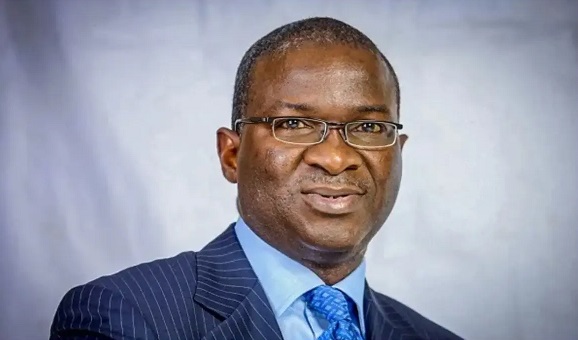
Former Minister and Governor of Lagos State, Babatunde Raji Fashola (SAN), has emphasized the need for modern, community-based sports arenas integrated with transport infrastructure as a critical step toward reviving Nigeria’s sports culture and drawing fans back to stadiums.
Speaking during the launch of Dr. Mumini Alao’s autobiography on Sunday, August 10, Fashola delivered the keynote address, highlighting how outdated stadium designs and poor accessibility have discouraged Nigerians from attending live sporting events.
“Back in Lagos, we had to create a BRT terminal in front of the Teslim Balogun and National Stadium, which was not part of the original plan,” Fashola recalled. “We understood the importance of easy access, exit, and crowd management — and that later informed the location of the Lagos Blue Line Train Station near Onikan Stadium.”
He called for the deliberate integration of stadiums with transportation systems, urging collaboration among engineering and architectural bodies, including COREN, NSE, and ARCON, to ensure stadiums are both modern and accessible.
Multi-Purpose Venues & Family Appeal
Fashola also advocated for the transformation of sports arenas into multi-purpose venues that can host not only sporting events but also concerts, retail spaces, children’s play areas, and family-centered activities.
“It’s time to move away from large, remote stadia. FIFA is now favouring community-based arenas like Agege Stadium, with capacities between 5,000 and 20,000. These are easier to manage, locally owned, and attract family audiences.”
Safety & Security: A Non-Negotiable Requirement
Emphasizing the importance of security, Fashola noted that safety concerns remain a major deterrent for spectators.
“If people are to attend these events, especially with their families, they must feel safe. This means trained personnel in crowd control, medical readiness, anti-terrorism, and law enforcement collaboration.”
He warned that large gatherings are often soft targets for terrorists and must be protected accordingly.
Governance, Calendars & Investor Confidence
Fashola warned that governance remains the most critical and difficult challenge facing Nigeria’s sports sector. Without transparent governance, clear sports calendars, and reliable dispute resolution systems, he said, investors would be reluctant to commit.
“Governance depends on people’s character. There must be no sloppiness or uncertainty. Everyone must know where they stand at all times. We may need new laws from the National and State Assemblies.”
He commended the Nigeria Professional Football League (NPFL) for releasing its 2025/2026 fixture list early, citing it as a good example of planning that can instill investor confidence — similar to the English Premier League.
“This is what enables corporations and stakeholders to make timely investment decisions. Sports must run on a fixed, reliable schedule,” he added.
National Sports Calendar Needed
Fashola called for the development of a coherent National Sports Calendar, involving the National Sports Commission, National Institute for Sports, and state and local authorities, to align school sports, grassroots development, and major competitions such as the National Sports Festival, All African Games, Commonwealth Games, and the Olympics.
“There must be no doubt about when any sporting event will hold — especially the National Premier League. Ad-hoc stoppages are unacceptable,” he said.
Fashola concluded by reiterating the importance of legal, professional, and technical cooperation across sectors to bring about a new era for Nigerian sports.
