


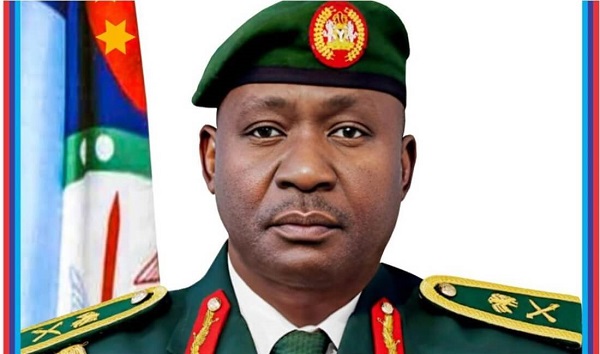
Nigeria’s Minister of Defence, Christopher Musa, has clarified that United States troops currently in the country are operating strictly in a training and advisory capacity.
In a statement issued by his Special Adviser on Media, Timothy Antigha, Musa made the remarks while presiding over the maiden edition of the Ministry’s Monthly Operational Briefing held at the ministry’s conference room in Abuja on Wednesday.
“The Americans are in Nigeria on a purely training assistance and advisory role,” Musa was quoted as saying. He added that the Armed Forces of Nigeria would remain fully in charge of all military operations conducted within the country.
During the briefing, the minister reviewed ongoing military operations across the country, assessed emerging threats to national security and provided strategic direction to the armed services.
Musa also commended Nigerian troops for their dedication in the fight against insecurity.
“General Musa commended the professionalism, resilience and gallantry of Nigerian troops and reaffirmed the commitment of his ministry to supporting troops’ welfare and improving the operational efficiency of the Armed Forces,” Antigha said.
The clarification follows the deployment of ground troops by the United States Armed Forces to Nigeria in February under a new security cooperation framework between both countries.
The development came after the United States government redesignated Nigeria as a Country of Particular Concern (CPC), a classification announced by Donald Trump.
Trump had earlier warned that the United States could intervene forcefully to confront terrorist groups responsible for attacks on Christian communities in Nigeria.
On 25 December, the United States also carried out air strikes on two terrorist enclaves in the Bauni Forest in Tangaza Local Government Area of Sokoto State as part of the security collaboration.
However, the Nigerian government has repeatedly rejected allegations of systemic persecution of Christians in the country, maintaining that ongoing security challenges affect multiple communities regardless of religious affiliation.
