


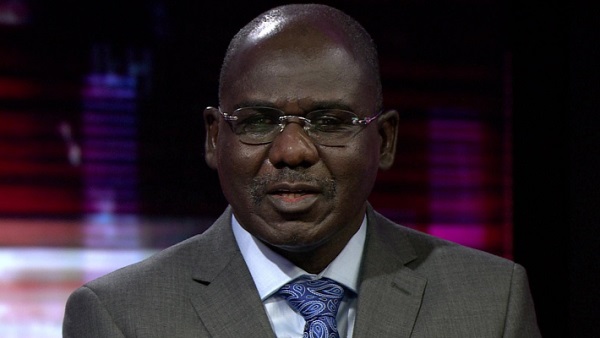
Former Chief of Army Staff, Lieutenant General Tukur Buratai (retd.), has said the $1bn approved for defence procurement during his tenure was released to the Ministry of Defence and did not pass through his hands or the accounts of the Nigerian Army, Navy or Air Force.
Buratai made the clarification on Monday at a conference organised by the Defence Correspondents Association of Nigeria in Abuja, describing allegations that the funds were diverted as “political and malicious”.
He said the National Economic Council approved the funds for defence procurement, but the Ministry of Defence handled their disbursement and the procurement process.
“The $1 billion was approved by the National Economic Council for defence procurement. Not a single dollar of that fund passed through my hands or through the accounts of the Nigerian Army, Navy, or Air Force. The funds were released to the Ministry of Defence, and the entire procurement process was handled by that ministry,” he said.
According to Buratai, the allegations first emerged during the 2019 general election period, when opposition figures claimed the money had been diverted for electoral purposes. He said the Federal Government publicly refuted the allegation at the time, but the controversy continued to affect the reputations of service chiefs.
He faulted the ministry for failing to publicly explain how the funds were disbursed and how contracts were awarded, arguing that accountability should rest with the institution responsible for managing the money.
“The Ministry of Defence must own procurement records. The $1 billion arms procurement controversy festered because the institution that managed the funds, the Ministry of Defence, remained silent while Service Chiefs absorbed criticism,” he said.
Buratai called for greater transparency in military procurement, proposing the establishment of a Defence Procurement Transparency Portal to publish information on contracts, contracting entities and delivery timelines, subject to national security restrictions.
He said such a platform would help the public and the media obtain answers from the institution responsible for procurement rather than from military officers who, according to him, did not handle the funds.
The retired army chief also proposed quarterly accountability bulletins summarising court-martial outcomes involving alleged human rights violations and operational misconduct. He said the publications should protect the rights of accused personnel and avoid compromising ongoing military operations.
On allegations of human rights violations by security personnel, Buratai said credible claims should be investigated and prosecuted where substantiated.
“I have always maintained that where credible allegations exist, they must be investigated and, where substantiated, prosecuted. The military is not above the law,” he said.
He acknowledged the need for the military to demonstrate that its disciplinary processes were credible, transparent and capable of addressing allegations at every level.
Buratai added that improved communication by the military and the Ministry of Defence would help address public concerns and provide the media with fuller context when reporting security operations.
Speaking at the conference, the Minister of Information and National Orientation, Mohammed Idris, said Nigeria’s security challenges could not be resolved through military force alone. He called for better intelligence, modern technology and stronger cooperation among security agencies and local communities.
Idris, who was represented by the Director-General of the Voice of Nigeria, Jibrin Ndace, said military operations remained necessary but needed to be supported by measures addressing the conditions that enabled criminal groups to recruit members and threaten citizens.
“Military operations remain necessary, but they must be supported by reliable intelligence, modern technology, effective coordination among security agencies and cooperation with communities,” the minister said.
He said President Bola Tinubu’s Renewed Hope Agenda placed national security at the centre of Nigeria’s development, with the administration pursuing Armed Forces modernisation, intelligence-led operations, improved surveillance and closer coordination among security and intelligence agencies.
Idris disclosed that Tinubu directed the preparation of a comprehensive National Threat Assessment and a rolling five-year Strategic Defence Operations Plan in August 2026, aimed at improving coordination, setting priorities and guiding resource allocation.
Describing the initiative as an important step towards a more coordinated national security response, the minister also said the President had approved salary increases of between 30 and 80 per cent for Armed Forces personnel, effective September 2026.
He said security policies should produce tangible benefits for Nigerians, including safer communities and roads, protection for farmers and businesses, and improved safety for children attending school.
On the media’s role, Idris stressed the importance of accurate reporting and responsible verification to prevent rumours from creating panic or undermining military operations.
However, he warned that responsible reporting should not be interpreted as shielding the government or security agencies from scrutiny.
“Journalists must keep asking difficult questions and hold institutions accountable, while respecting legitimate operational sensitivities,” he said.
