


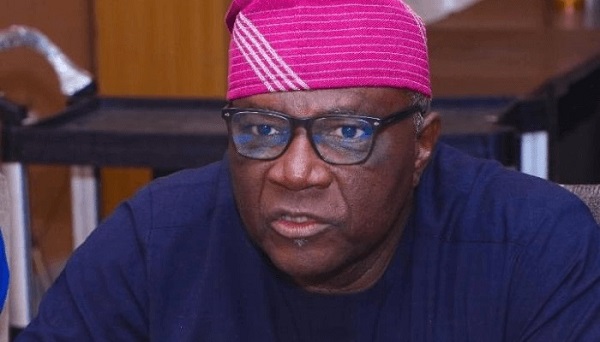
Nigerians may soon begin to feel the tangible benefits of ongoing economic reforms, according to Bayo Onanuga, Special Adviser on Media and Information Strategy to President Bola Tinubu. Speaking to journalists in Lagos on Sunday, Onanuga expressed confidence that the administration’s efforts are starting to yield positive results across various sectors.
“The President’s years in office began with clear policy directions and implementation,” Onanuga noted. “A lot of reforms have taken place across sectors. The President has laid down many fundamentals that would ensure growth.”
While many citizens continue to grapple with high living costs, Onanuga urged patience, emphasizing that meaningful reform takes time. He explained that economic experts typically evaluate the full impact of government policies over a decade or more—not just within two years.
Addressing Legacy Issues and Difficult Decisions
Onanuga pointed out that Tinubu’s administration has taken bold steps to tackle economic challenges long avoided by past governments. A major turning point, he said, was the removal of fuel subsidies—a tough but necessary decision.
“There was no fuel,” he recalled. “Many stations were saying no fuel. What was happening at that time was that the NNPC had reached the bottom point. It had no money to import fuel.”
According to Onanuga, the Nigerian National Petroleum Corporation (NNPC) was burdened with debt, owing suppliers approximately $6 billion while the government itself owed the corporation around ₦4 trillion. In that climate, continuing subsidies was unsustainable.
Borrowing, Devaluation, and Economic Realities
Onanuga also addressed concerns over the country’s borrowing, stating that it is a common economic strategy used by even the most advanced nations.
“Nigeria has abundant resources that we are harnessing,” he explained, “but not as much readily available money as people might think.” He stressed that the loans were not wasted, pointing to significant infrastructure projects like coastal roads as examples of how borrowed funds are being used to support national development.
He further defended the naira’s devaluation as a necessary part of broader economic adjustments. “Even the UK and US at some point devalued their currencies. These are universal economic principles.”
Signs of Growth: Production, Profitability, and Local Investment
Onanuga shared optimistic signs that the reforms are beginning to bear fruit. He mentioned companies like Nestlé and Nigerian Breweries, which initially faced setbacks but have since adapted by sourcing materials locally—and are now reporting profits.
“This economy has opened up opportunities in many forms for Nigerians,” he said. “Those who can really exploit it are making money.”
From exporters of cocoa and Zobo to investors in agriculture and manufacturing, Onanuga highlighted that many Nigerians are finding new ways to thrive in the current economic environment.
Looking Ahead with Cautious Optimism
As more investments pour in and infrastructure projects progress, Onanuga believes that the general public will soon feel the benefits more directly. He stressed the importance of seeing the bigger picture.
“We don’t do our people any good when we keep pushing stories of gloom and doom,” he said. “There’s actually light at the end of the tunnel.”
While challenges remain, the message is clear: the administration believes it is laying a foundation for long-term growth—and Nigerians are encouraged to stay hopeful as the nation navigates this critical phase of economic transformation.
