


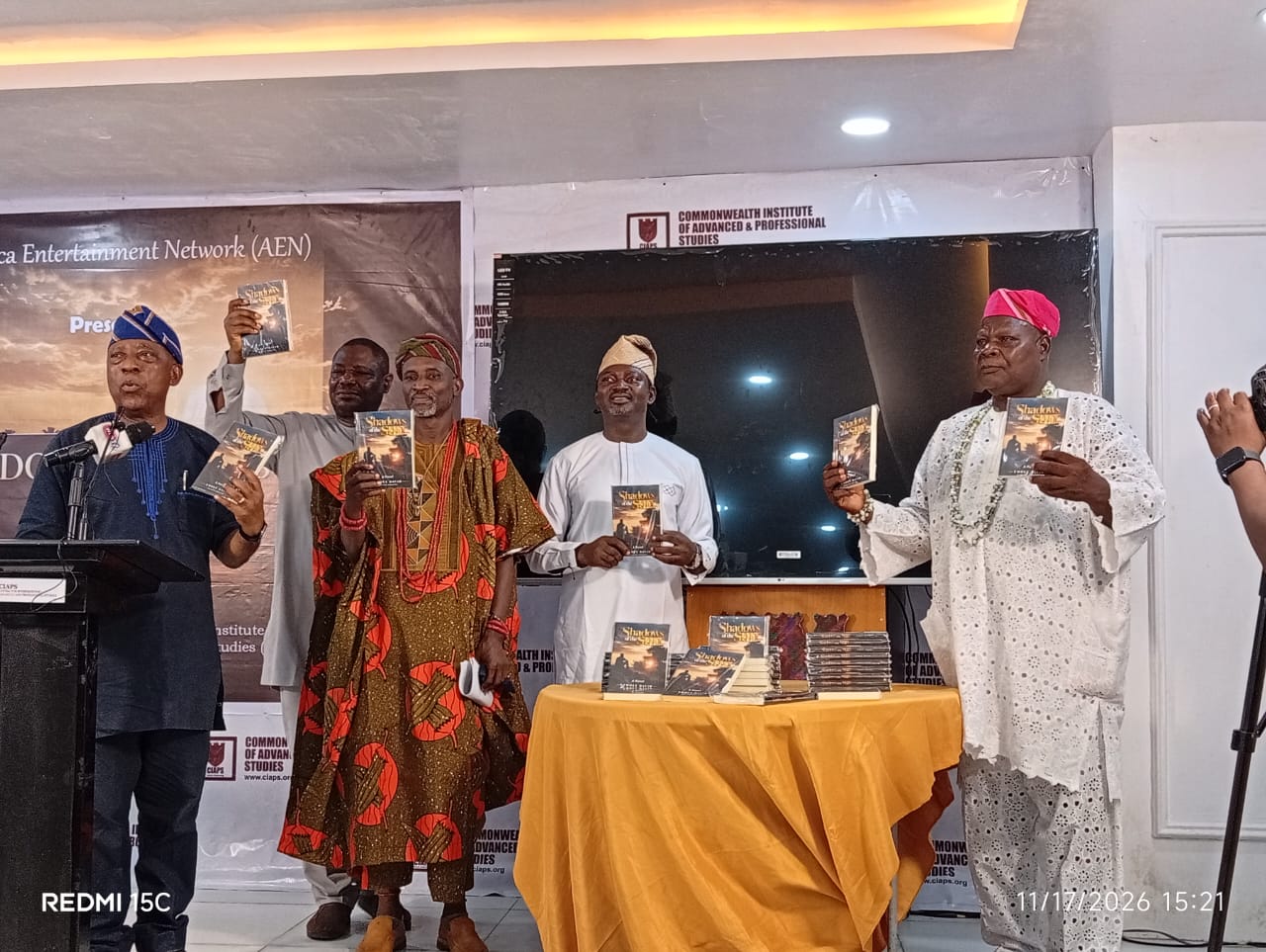
The historical novel examines colonialism, African identity, traditional spirituality and the enduring question of whether political independence has translated into true freedom of the mind.
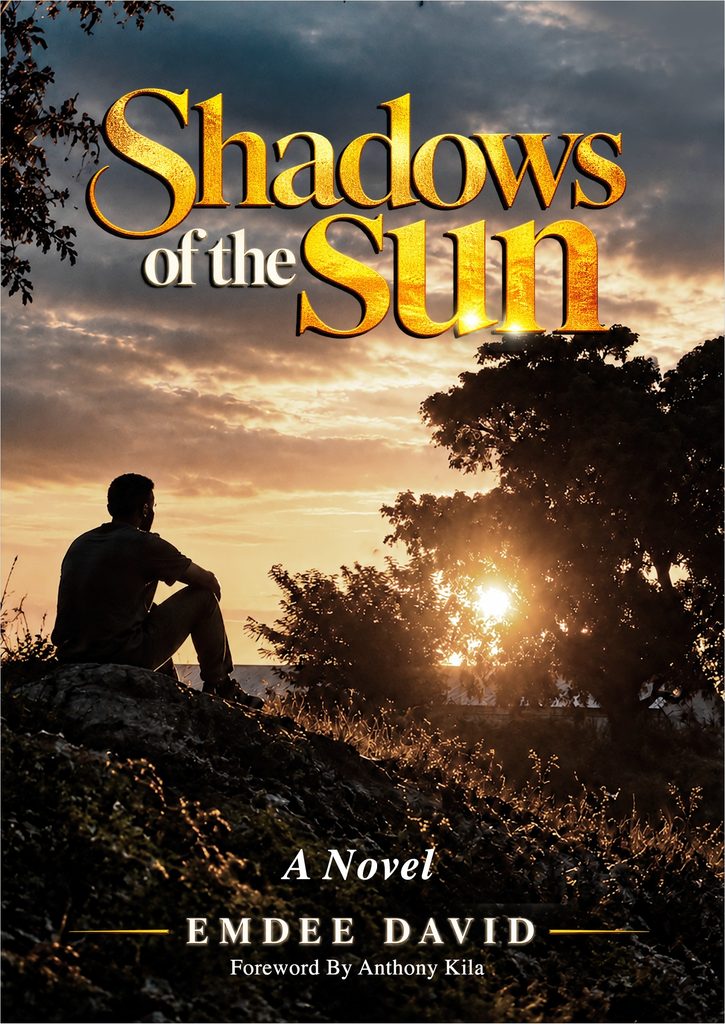
Nigerian author Emdee David, President and Chief Executive Officer of Africa Entertainment Network and Trumpsound Publishing Company, has turned the spotlight on Nigeria’s colonial history, cultural identity and quest for self-determination in his historical fiction novel, Shadows of the Sun.
Set in pre-independence Nigeria, the novel explores the tensions between traditional African beliefs, Christianity and colonial administration through the experiences of Kokori, a determined man from the fictional Yoruba village of Abulenla in western Nigeria.
At the heart of the story is a question that continues to resonate decades after Nigeria gained independence in 1960: Did the country achieve genuine mental independence, or did colonial influence continue to shape the way its people perceive themselves and their cultural heritage?
David uses Kokori’s journey to examine what he describes as the struggle for freedom beyond political sovereignty. For the protagonist, independence is not simply about ending British colonial rule; it is also about reclaiming African identity, cultural confidence and the freedom to determine one’s spiritual beliefs.
Kokori is portrayed as a man raised on the proverbs, customs and spiritual traditions of his people. His worldview, however, is challenged by the arrival of Christian missionaries and colonial authorities, whose influence gradually transforms the social, religious and political landscape of Abulenla.
The missionaries introduce Christianity, alongside schools and hospitals, while the colonial administration establishes new systems of authority and governance. Although these developments bring social amenities and educational opportunities to the community, they also raise questions about cultural displacement and the perceived superiority of Western values.
For Kokori, the conflict is not necessarily between Christianity and African traditional religion, or between education and indigenous knowledge. Rather, it concerns the expectation that embracing Western religion and education must involve rejecting one’s cultural roots.
He questions why accepting Christianity should require abandoning the spiritual traditions of his ancestors and why education should teach Africans to regard their heritage as inferior.
His position is captured in the central dilemma of the novel: why should a person have to reject his earthly father to embrace a Father in Heaven?
Kokori’s ambitions, however, extend beyond religious and cultural freedom. He also wants his people to govern themselves without colonial interference. While the wider Nigerian nationalist movement is campaigning for independence from Britain, Kokori’s personal ambition is to establish control over Abulenla and displace the colonial authorities.
Yet his pursuit of power introduces another dimension to the narrative. Although he claims to champion the freedom of his people, Kokori does not initially secure their mandate through popular consent. Instead, he seeks to impose himself on the community.
His ambition eventually brings him into conflict with his own ward, a servant whose challenge threatens not only his authority but also his very existence. Their confrontation plunges Abulenla, portrayed as a miniature reflection of Nigeria, into a struggle marked by ambition, rivalry, power and uncertainty.
Through this unfolding conflict, David examines the contradictions that can emerge when the pursuit of liberation becomes entangled with personal ambition and the desire for political dominance.
Shadows of the Sun spans the period before Nigeria’s independence in 1960 and extends into approximately two decades after the country’s emergence as an independent nation. It is therefore not simply a story about the end of British colonial rule, but also an exploration of the challenges of cultural and psychological decolonisation.
The novel examines African identity, indigenous spirituality, Christianity, traditional leadership and the complexities of self-governance. It also raises questions about the extent to which colonial attitudes and inherited systems of thought continued to influence African societies after political independence.
In presenting these themes, David offers readers a historical narrative that connects Nigeria’s past with contemporary conversations about identity, religion, leadership and cultural preservation.
For admirers of Chinua Achebe’s Things Fall Apart, Chimamanda Ngozi Adichie’s Half of a Yellow Sun and Ben Okri’s The Famished Road, the novel explores familiar questions about African history and society while presenting them through the distinctive setting and characters of Abulenla.
As Nigeria reflects on its history and place in the world in 2026, Shadows of the Sun invites readers to reconsider the meaning of freedom and the relationship between political independence and the liberation of the mind.
For David, the story is ultimately about more than one man or one village. It is a reflection of a wider African experience and a continuing conversation about who has the authority to define African identity.
‘Shadows of the Sun’ is, in essence, a story about Nigeria — its history, its contradictions and its continuing search for freedom in both body and thought.
