


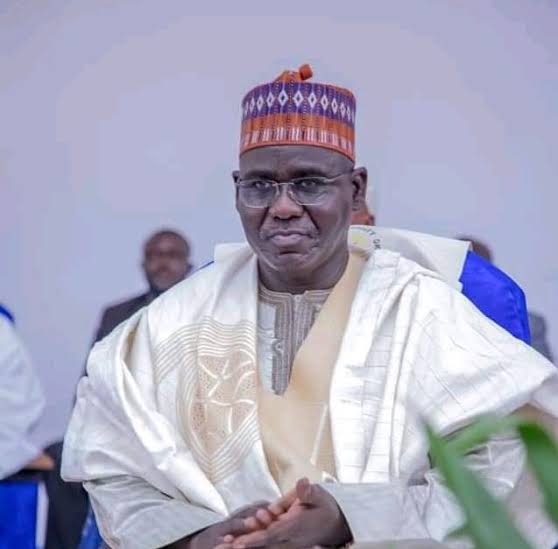
A chilling reminder of Nigeria’s worsening security crisis emerged on Friday as former Chief of Army Staff, Lt. Gen. Tukur Buratai (retd), narrowly escaped an ambush in Borno State. The convoy carrying the retired general came under heavy gunfire near a frontline military base, in what is believed to be an attack by suspected Boko Haram insurgents.
The incident was brought to light by Senator Ali Ndume, who represents Borno in the National Assembly. Speaking during a Sunday interview on Channels Television’s Politics Today, Ndume confirmed that Buratai’s team was ambushed in a coordinated assault that led to a fierce exchange of gunfire between the attackers and soldiers escorting him.
“We are in a dire security situation,” Ndume said. “Just two days ago, Buratai was attacked at the front operations base in Borno. His team responded gallantly, but the insurgents managed to destroy several military assets.”
Among the equipment reportedly targeted were Mine-Resistant Ambush Protected Vehicles (MRAPVs), tanks, and heavy machine guns. In some cases, insurgents not only destroyed these assets but also looted valuable military hardware.
“The situation in Borno is deteriorating rapidly,” Ndume warned. “Insurgents now move freely, torching and stealing military equipment. It is becoming a full-blown crisis.”
The attack on Buratai—who served as Nigeria’s Chief of Army Staff from 2015 to 2021—underscores the urgent need for a comprehensive overhaul of Nigeria’s security architecture. Despite years of military campaigns against insurgent groups like Boko Haram and ISWAP, parts of the North-East remain dangerously unstable.
Ndume also used the interview to shed light on Nigeria’s broader security challenges. “All six geopolitical zones are experiencing security challenges to varying degrees,” he said. “Even in the South-South, we are grappling with economic sabotage like oil theft. At this point, the South-West appears to be the only relatively safe region.”
Buratai, a key figure in Nigeria’s counterinsurgency efforts during his tenure, has remained active in defense and security circles post-retirement. His near-death experience serves as a sobering indicator of just how emboldened insurgent groups have become—and how urgently Nigeria must rethink its security strategies.
As violence, banditry, and insurgency continue to spread across the nation, the call for stronger, smarter, and more coordinated national security reforms grows ever louder.
