


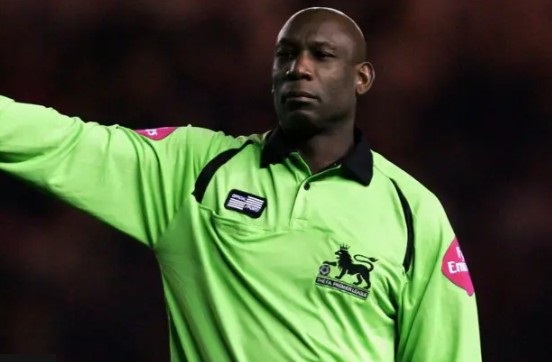
The football world is mourning the loss of a true pioneer. Uriah Rennie, the Premier League’s first Black referee and a respected figure in both sport and community service, has died at the age of 65.
Rennie made history in 1997 when he took charge of a top-flight match between Derby County and Wimbledon, becoming the first Black official to referee in the Premier League. Over an 11-year career at the highest level, he officiated more than 300 professional matches, including 175 in the Premier League. His presence on the pitch symbolized progress in a sport long criticized for its lack of diversity in leadership roles.
“We are deeply saddened to learn of the passing of our former chair and trailblazing referee, Uriah Rennie,” said Sheffield & Hallamshire County Football Association in a tribute. “He broke down barriers, shaped our football community, and inspired generations to come.”
Born in Jamaica and raised in Sheffield, Rennie’s journey began in grassroots football, where he started refereeing in 1979. His rise to the Premier League was not just a personal achievement, but a landmark moment for Black representation in English football.
Off the pitch, Rennie was equally impactful. A magistrate in Sheffield since 1996, he championed causes ranging from mental health to equality in sport and youth empowerment. He held a master’s degree in business administration and law, and in 2023 was awarded an honorary doctorate by Sheffield Hallam University in recognition of his distinguished contributions to sport and community service. Just this past May, he was appointed as the university’s new chancellor.
Rennie had recently spoken publicly about his health struggles, revealing that a rare condition had left him paralysed from the waist down. Despite this, he remained optimistic and resilient, learning to walk again and continuing to advocate for others.
Tributes have poured in from across the football and wider sports community. Leon Mann, co-founder of the Football Black List, said: “Incredibly sad news about the passing of Uriah Rennie. A Black pioneering referee and leader in the game. We owe so much to those who push open the doors. Uriah should never, ever be forgotten.”
Uriah Rennie’s life was defined by firsts, but also by impact. He paved the way for future generations, not just in football, but in every sphere where inclusion, representation, and courage matter. His legacy will endure—on the pitch and far beyond.
