


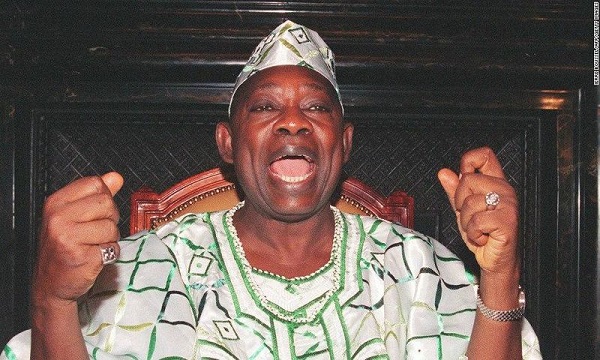
Jamiu Abiola, son of the late Chief MKO Abiola, has said that Nigeria could have attained far greater economic development had his father been allowed to assume office following his widely acknowledged victory in the June 12, 1993 presidential election.
Speaking on Channels Television’s June 12 Special Forum on Thursday, Jamiu reflected on what he described as a “missed golden opportunity” for Nigeria at a time of global economic expansion.
“That 1993 period was a time when the world itself was having an international economic boom. So, we could have tapped into that,” Jamiu stated.
Instead, he said, Nigeria got a kleptocratic regime that derailed its development path:
“But what did we get in return? We got a kleptomaniac as head of state. I’m not going to talk about Abacha because he has his problems wherever he has found himself.”
Erasing a Legacy
Jamiu, who currently serves as Senior Special Adviser to President Bola Tinubu on Linguistics and Foreign Affairs, lamented the apparent attempts to erase MKO Abiola’s role from Nigeria’s democratic narrative.
“I wrote a book in 2015 because I came to realise that my father’s name was becoming like a memory that was becoming distant. Some people were hellbent on rewriting the history of Nigeria without him.”
He recounted instances where foreign dignitaries visiting Nigeria would mention past leaders like Yar’Adua, while omitting Abiola, the man widely regarded as the symbol of Nigeria’s pro-democracy struggle.
“Like my father would say: they wanted to shave his head in his absence.”
His 2015 book, The President Who Never Ruled, was written to preserve and promote MKO Abiola’s legacy for future generations.
Recognition at Last
Jamiu also praised the 2018 decision by former President Muhammadu Buhari to officially declare June 12 as Nigeria’s Democracy Day and posthumously award MKO Abiola the GCFR — an honour traditionally reserved for presidents.
The move was widely seen as a long-overdue act of historical justice and national healing.
Conclusion
Jamiu Abiola’s remarks add personal and historical weight to the significance of June 12, highlighting not only what was lost due to the annulment, but also what remains at stake in preserving Nigeria’s democratic memory.
