


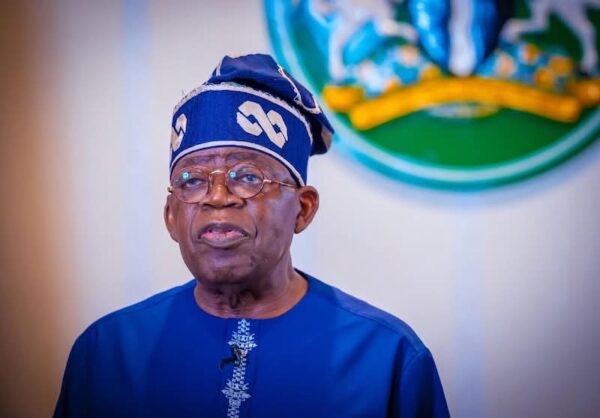
President Bola Ahmed Tinubu has arrived in Makurdi, the Benue State capital, in what the presidency describes as a decisive mission to address escalating violence and bring succor to communities ravaged by repeated attacks.
Touching down at the Tactical Air Command of the Nigerian Air Force around 12:58 p.m., the President’s presence marks the first high-level federal response following a series of brutal killings that have rocked the state in recent weeks.
“This visit underscores President Tinubu’s commitment to finding a lasting solution to the crisis that has left families shattered and communities destabilized,” said Presidential Spokesman Bayo Onanuga in a statement.
What Prompted the Visit?
Benue State has once again found itself at the center of national mourning, following another deadly assault on the village of Yelewata, among other affected areas. Entire families have been wiped out, houses burnt, and thousands displaced in the recurring wave of violence, largely attributed to farmer-herder conflicts and banditry.
Tinubu’s visit is not ceremonial—it is deliberately timed and symbolically urgent, especially after criticism from political opponents and civil society over delayed federal attention.
Engagement, Not Optics: The Format of the Visit
In a marked departure from ribbon-cutting politics, Tinubu’s visit to Benue is designed as a “town hall-style dialogue”, bringing together:
- Traditional rulers
- Religious leaders
- Political actors
- Community elders
- Youth and women’s groups
The goal is to listen, mediate, and act—a grassroots-driven peacebuilding effort that could set a precedent for federal crisis response.
Security-First Approach: Who Came Before the President?
To prepare the ground, a powerful federal delegation arrived earlier this week, comprising:
- Secretary to the Government of the Federation
- Inspector-General of Police
- National Security Adviser
- Heads of intelligence agencies
- Senate and House Defence Committee Chairmen
The delegation conducted on-the-ground assessments, held security briefings, and consulted with local government authorities—a signal that this visit is backed by operational seriousness, not just political symbolism.
National Priorities Reordered
President Tinubu postponed a planned visit to Kaduna—originally scheduled for Thursday—to commission infrastructure projects. That trip will now happen after the Benue engagement, a move that speaks volumes about the administration’s shifting focus toward conflict resolution and internal stability.
“This is not about politics; it’s about protecting lives,” an aide to the president said.
Wider Implications for Tinubu’s Leadership Narrative
This visit is Tinubu’s most visible attempt yet to assert control over Nigeria’s deepening insecurity—particularly in rural, agrarian states like Benue that have long suffered from state neglect and cyclical violence.
But it also comes amid mounting pressure from opposition figures such as Peter Obi, who have called for equal federal compassion in places like Mokwa, Niger State, where floods recently claimed over 200 lives.
By showing up in Makurdi, Tinubu signals that “leadership by remote control” (as critics put it) will give way to on-ground engagement—but whether this becomes policy or remains an exception will shape public perception going forward.
A President’s Pledge
Earlier statements by the presidency indicated that Tinubu:
- Condemns the killings in the strongest terms
- Urges all stakeholders to embrace peace and dialogue
- Promises a renewed federal commitment to restoring security and livelihoods
The real test now lies in whether federal security agencies, humanitarian aid providers, and state government actors can convert this high-profile visit into concrete relief, prosecution of perpetrators, and long-term peace frameworks.
Conclusion: Beyond the Visit
President Tinubu’s arrival in Makurdi is more than a political gesture—it’s a test of responsive governance in a democracy under pressure. If the visit catalyzes effective action and sustained peace in Benue, it could become a template for federal crisis intervention. If not, it may be remembered as yet another flyover in the face of deep-rooted tragedy.
