


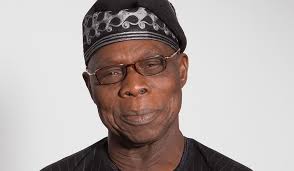
Former Attorney-General of the Federation, Mohammed Bello Adoke, has accused ex-President Olusegun Obasanjo of igniting the now-infamous OPL 245 oil scandal, alleging that Obasanjo’s actions triggered a legal and diplomatic storm that damaged Nigeria’s global image and harmed investment in the country’s oil sector.
The claims are detailed in Adoke’s newly released book, “OPL 245: The Inside Story of the $1.3bn Nigerian Oil Block,” published in the UK by The Conrad Press. The book provides what Adoke calls an insider’s account of the controversial oil deal that has spanned decades, multiple administrations, and numerous courtrooms around the world.
“Obasanjo Set OPL 245 on Fire” – Adoke
In the book, Adoke accuses Obasanjo of arbitrarily revoking OPL 245 from Malabu Oil & Gas Ltd in 2001, just five weeks after the license was reissued, without providing reasons or following due process.
“Obasanjo woke up one morning and set OPL 245 on fire… He revoked the block without giving any reasons,” Adoke wrote. “It was reminiscent of military-era impunity, not the rule of law expected in a democracy.”
Adoke claims this single act of “executive recklessness” led to a series of legal battles, international trials, and reputational damage—including his own prosecution under the Buhari administration.
The Players Behind the Revocation
According to Adoke, private interests may have influenced the revocation of the oil block. He alleges that Gabriel Volpi, a businessman linked to then-Vice President Atiku Abubakar, and Otunba Oyewole Fasawe, a known associate of Obasanjo, had tried to acquire a controlling stake in Malabu from Dan Etete, the former oil minister and de facto owner of the company.
Adoke claims negotiations failed after Etete refused to cede control—shortly after, the oil block was revoked by Obasanjo.
Settlement and Shell’s Involvement
Despite revoking the block, Obasanjo’s government would later approve a settlement in 2006 that returned OPL 245 to Malabu. The block was eventually sold to Shell and Eni in 2011 for $1.1 billion, during the Jonathan administration—an agreement that sparked corruption probes in Italy, the UK, and Nigeria.
Obasanjo, however, later denied ever approving the 2006 settlement, prompting Adoke to accuse the former president of dishonesty and failed leadership.
“Obasanjo failed the ultimate leadership test,” Adoke wrote. “He created the OPL 245 mess… refused to take responsibility… and tried to rewrite history.”
Adoke: Obasanjo’s Denial Emboldened My Persecution
Adoke revealed that Obasanjo’s public disavowal of the settlement agreement—published in a 2017 Premium Times interview—was seized upon by the Buhari government as ammunition to prosecute him.
But according to Adoke, documentary evidence soon surfaced showing Obasanjo’s handwritten approval of the deal.
“Rather than keep his word by apologizing to Nigerians, Obasanjo went silent… like Pontius Pilate, he washed his hands of a problem he created,” Adoke said.
He insists that if Obasanjo had simply acknowledged his role, it would have “made a world of difference” to the legal and political battles that followed.
A Question Still Unanswered
Adoke challenges Obasanjo to explain how Shell was authorized to begin de-risking OPL 245 in 2002 and why the company paid only a portion of the $210 million signature bonus into an escrow account—moves that suggested Shell anticipated legal challenges.
“Who gave Shell the go-ahead?” Adoke asked. “That was the beginning of the legal quagmire Nigeria found itself in.”
A Book of Reckoning
“OPL 245: The Inside Story of the $1.3bn Nigerian Oil Block” is expected to stir political and public debate. It is as much a personal defense as it is a direct indictment of a former president widely regarded as one of Nigeria’s most influential leaders.
The book is set to be officially unveiled in Abuja this Thursday.
