


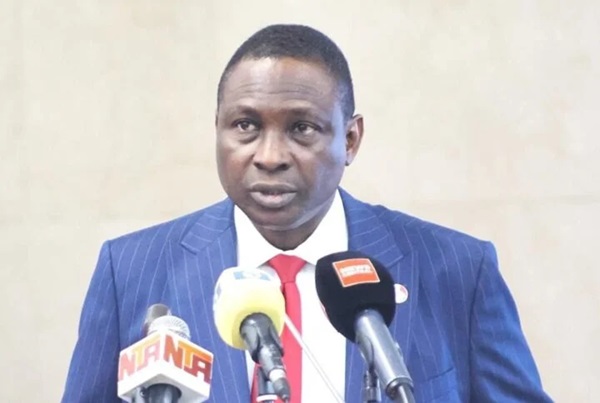
Chairman of the Economic and Financial Crimes Commission (EFCC), Ola Olukoyede, has sounded the alarm over the increasing use of cryptocurrencies and other virtual assets by corrupt politicians to conceal stolen funds and evade law enforcement.
Speaking at an event in Abuja marking Africa Anti-Corruption Day, Olukoyede identified illicit financial flows as a major impediment to Africa’s development, driven primarily by money laundering and a surge in virtual asset-related fraud.
“These flows are coming from diverse criminal activities, with money laundering ranking as the highest,” Olukoyede said.
“Another rising criminal engagement that has the potential to outpace even money laundering on the continent is virtual assets and investment scams.”
While acknowledging that cryptocurrencies and digital tokens are not inherently illegal, Olukoyede warned that fraudsters exploit these tools to store and transfer illicit wealth beyond the reach of regulatory and investigative agencies.
“Our findings showed that fraudulent politicians are already perfecting schemes and hiding their loot in cryptocurrencies to beat the investigative dragnets of anti-corruption agencies,” he explained.
“Stolen funds and unexplained wealth are being warehoused in wallets, and payments for services are being done through this window.”
The EFCC chairman also highlighted the rapid spread of digital investment scams, including Ponzi schemes, across Africa, which target vulnerable investors.
“Fraudsters are exploiting vulnerabilities of desperate investors to defraud them through various dishonest schemes,” he said.
“Every exploitation of investors in any guise is considered a fraudulent act.”
Olukoyede cited the EFCC’s recent successes in tackling such crimes, including the investigation and prosecution of the CBEX scam, crediting proactive training and intelligence gathering for these breakthroughs.
However, he lamented that investor negligence continues to fuel fraudulent schemes.
“The investing public do inadvertently aid fraudulent practices through lack of due diligence on schemes advertised to them,” he said.
“Investors hardly send suspicious transaction reports to the EFCC until they are defrauded.”
The EFCC chairman called on Nigerians to deepen their understanding of virtual assets and stressed that public awareness and careful scrutiny are essential to preventing fraud.
