


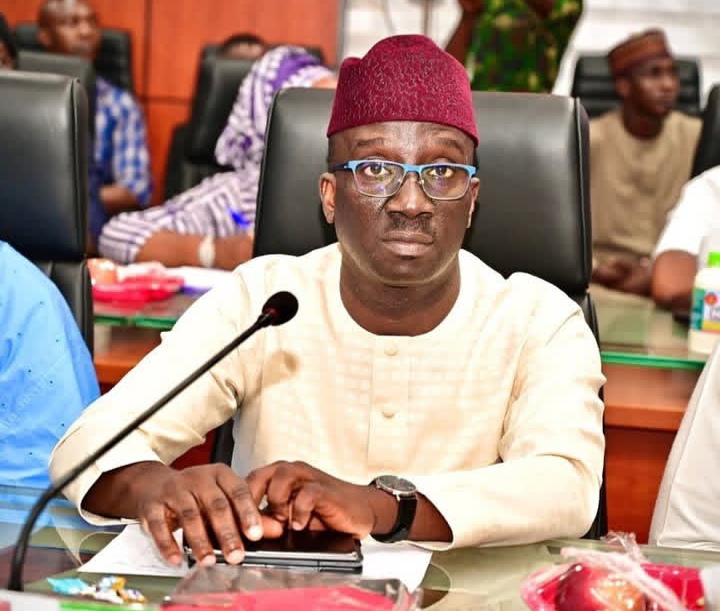
Tensions are rising in Edo State’s political landscape as Governor Monday Okpebholo issued a stark warning to Labour Party (LP) presidential candidate, Peter Obi. The governor said Obi must not return to the state without prior security clearance, following a visit by the opposition figure that coincided with a spate of violence.
Speaking on Friday while welcoming Marcus Onobun—a member of the House of Representatives—into the All Progressives Congress (APC), Okpebholo blamed Obi’s recent presence in the state for escalating tensions and alleged that three people were killed shortly after the visit.
“That man who says he has no shishi came and dropped N15 million. Where did he get it from? After he left, three people were killed,” Okpebholo stated.
“I’m sending a direct message to him—he must not come to Edo without security clearance. There is a new sheriff in town.”
The governor added that Obi’s security would not be guaranteed unless such protocols are observed, and warned that any harm that befalls the LP leader during future visits to Edo would be his own responsibility.
Governor Okpebholo emphasized that the state government would no longer tolerate violence associated with political visits or rallies. Though he did not directly link Obi to the violence, the implication was clear: opposition activities are being closely monitored under his administration.
The comments come amid heightened political maneuvering as parties position themselves ahead of the 2027 elections.
Addressing claims that the APC is aggressively recruiting members, Okpebholo insisted that people are defecting to the ruling party of their own volition, drawn by the party’s “effective governance.”
“We’re not lobbying anyone to join APC. They’re coming because they see the results,” he said, boasting that Edo will deliver 2.5 million votes for President Bola Tinubu in the next general election.
In a fiery rebuke, Okpebholo accused unnamed opposition leaders of being responsible for some of Nigeria’s most pressing issues—ranging from corruption to insecurity.
“Some of them stole railway funds. Some were senate presidents and couldn’t build roads to their villages. Others sold off Nigeria’s assets and enabled Boko Haram and kidnappers,” he said.
He also mocked the proliferation of new political parties, describing them as “insecurity merchants” who jump from one platform to another:
“Today it’s SDP, tomorrow ADC, next ADA—we don’t need them.”
The governor declared that the Peoples Democratic Party (PDP) is ‘effectively buried’ in Edo, rejecting suggestions—especially from social media—that it still has a foothold in the state.
His remarks signal a deepening rift not only between the ruling APC and the opposition but also reflect growing friction between traditional power blocs and the Labour Party’s emerging influence, particularly among young voters.
Governor Okpebholo’s statements have sparked intense public debate, raising questions about freedom of movement, political neutrality in governance, and the right of opposition figures to campaign freely. With Nigeria’s next general election just over two years away, this clash in Edo could be a sign of the tone and tactics to expect nationwide.
