


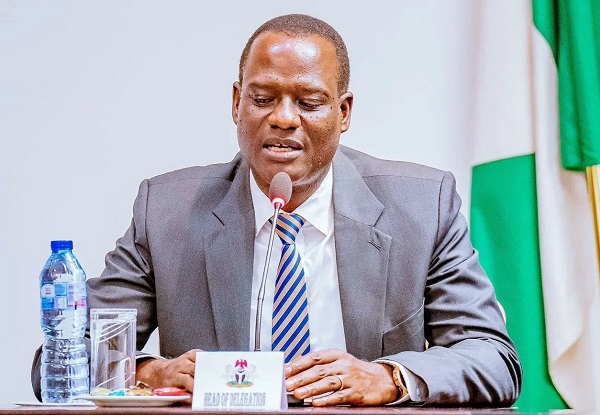
Nigeria’s lead tax reformer, Mr. Taiwo Oyedele, says bold economic reforms have helped pull the country back from the brink of financial collapse, likening the previous trajectory to the economic chaos of Zimbabwe and Venezuela.
Speaking at PwC’s Executive Summit on Tax Reform in Lagos on Monday, Oyedele, who chairs the Presidential Fiscal Policy and Tax Reforms Committee, shared a sobering message: “Without these reforms, our currency could have become worthless.”
One of the key achievements he highlighted is the drastic drop in debt servicing pressure. Nigeria was previously using almost 97% of its revenue to service debt. That figure has now fallen to under 50%, thanks to a combination of fiscal tightening and improved revenue collection.
“We’ve cleared unmet forex futures worth over $7 billion and boosted our external reserves from under $4 billion to over $20 billion,” he noted. “We’re now spending more on infrastructure instead of printing money to pay salaries.”
In a dramatic moment, Oyedele pulled out a 100 trillion Zimbabwean dollar note, once worth less than a loaf of bread, as a warning of what could have happened. “Nigeria was on the same road. Bigger deficits. More naira printing. If reforms didn’t happen, we’d be spending over 100% of our revenue on debt today.”
He added that if Nigeria had started similar reforms a decade ago, the country could have grown into a $1 trillion economy with lower fuel prices and a stable exchange rate around ₦300/$1.
Oyedele didn’t mince words when talking about the damage done by petrol subsidies. “We were spending trillions on fuel subsidies—money we didn’t even have. NNPC used tax revenues to fund subsidies, and even that wasn’t enough.”
He said the government had printed over ₦30 trillion without making major infrastructure investments, essentially burning cash to stay afloat.
A major highlight of Nigeria’s new tax framework is its protection of the poorest. “Only the top 3% of the informal sector can afford to pay taxes,” Oyedele said. “We’ve legally exempted the bottom 97%—let them breathe and grow first.”
He also warned against tax evasion and underreporting by businesses. “If you try to cheat the system, we will find you—and there will be consequences.”
According to Oyedele, Nigeria’s new tax system is now progressive, meaning higher earners will contribute more, and the burden is reduced for low-income citizens and small businesses.
President Tinubu recently signed four new tax bills into law, which are expected to take effect from January 1, 2026. Some key changes include:
- Exemption from personal income tax for those earning under ₦800,000 per year
- A single federal tax collector (FIRS) to eliminate confusion
- New rules to ensure foreign companies with decision-makers based in Nigeria are taxed accordingly
- Closure of loopholes used for offshore tax avoidance
Also speaking at the summit, Sam Abu, Regional Senior Partner at PwC West Africa, praised the reforms as a strong start but emphasized that success would depend on collaboration and commitment from both public and private sectors.
“Policy alone won’t deliver results,” he said. “It’s up to all of us—businesses, government, citizens—to work with integrity and engage meaningfully in this new era.”
Nigeria has taken difficult but necessary steps to avoid economic disaster. While challenges remain, the direction of reform signals a more sustainable, transparent, and fair tax environment—one where growth is possible, and collapse is no longer looming.
