


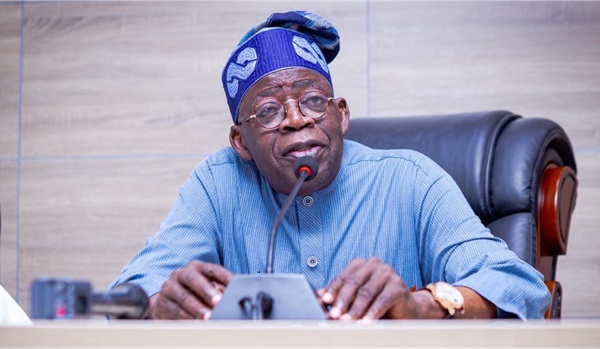
The long-simmering debate over Nigeria’s power rotation arrangement reignited on Tuesday as prominent northern leaders gathered in Kaduna to assess President Bola Tinubu’s performance two years into office, with discussions veering into contentious territory over the region’s political future.
The event, organised by the Sir Ahmadu Bello Memorial Foundation and held at Arewa House, brought together northern political leaders, technocrats, traditional rulers, and civil society representatives from the 19 northern states and the Federal Capital Territory. The two-day summit, themed “Assessing Electoral Promises: Fostering Government-Citizen Engagement for National Unity”, became a flashpoint for divergent views on Tinubu’s leadership and the future of presidential zoning.
Akume Warns North to Wait Until 2031
Representing President Tinubu, Secretary to the Government of the Federation (SGF), Senator George Akume, urged northern politicians to respect the informal zoning agreement that rotates presidential power between the North and South.
“In 1999, northern patriots like Solomon Lar, Adamu Ciroma, Abubakar Rimi, and Jerry Gana agreed that power rotation is key to peace and national cohesion,” Akume said. “Based on that unwritten understanding, the North will be eligible again in 2031.”
He called for patience, adding, “Let us be patient. Nigeria will not cease to exist before 2031. When it’s our turn, the nation will know.”
Support from Afenifere, Middle Belt Forum
Akume’s remarks were backed by key regional and ethnic groups, including the Middle Belt Forum (MBF) and the pan-Yoruba socio-political organisation Afenifere.
Bitrus Pogu, MBF President, acknowledged that while power rotation is not constitutionally mandated, it has served as a stabilising mechanism. “Yes, a southerner is in the presidential seat at the moment… then the North should be patient till 2031,” he said.
Afenifere’s Organising Secretary, Kole Omololu, lauded Akume’s message, calling it “a stabilising message that Nigerians of goodwill should embrace.”
“We commend the SGF’s firm and principled articulation of the necessity to uphold the unwritten but nationally recognised convention of power rotation,” Omololu said. He also noted ongoing federal infrastructure projects in the North, urging Nigerians to assess governance through “data, delivery, and strategic impact.”
Opposition Voices: Babachir Lawal, Labour Party, NNPP Reject Zoning
Not everyone agreed. Former SGF Babachir Lawal strongly criticised Akume and the ruling APC, calling their insistence on zoning hypocritical given Tinubu’s adoption of a controversial Muslim-Muslim ticket in 2023.
“Are competent people found only in the South? Is that what Akume and Tinubu are saying?” Lawal asked. “How can somebody who fielded a Muslim-Muslim ticket now turn around and demand that zoning be respected?”
The Labour Party and the New Nigeria People’s Party (NNPP) also rejected zoning as outdated and divisive.
Dr Ayo Olorunfemi, Deputy National Chairman of the Labour Party, argued that competence—not regional origin—should determine leadership. “It’s about getting the right leader for Nigeria… regardless of where he is coming from.”
Similarly, Ladipo Johnson, NNPP National Publicity Secretary, said: “There must not be a restriction. If religious balance was jettisoned in 2023, why insist on zoning in 2027?”
Partisan Divide: APC, PDP, and APGA Stake Positions
APGA’s National Publicity Secretary, Ejimofor Opara, supported a southern presidency in 2027, stating, “We will certainly promote a southern candidate… More importantly, the progressives will work together come 2027.”
He, however, distanced APGA from any opposition coalition led by former Vice President Atiku Abubakar, calling it “a coalition of spent politicians.”
The Peoples Democratic Party (PDP), meanwhile, took a broader stance, focusing on Tinubu’s performance. “By 2027, Nigerians will vote them out because they have failed—failed woefully,” said PDP spokesman Debo Ologunagba.
Kwankwaso Accused of Incitement as Project Claims Disputed
Adding to the tensions, former Kano governor Rabiu Kwankwaso accused the federal government of favouring the South in infrastructure distribution. But the Presidency responded by releasing a list of projects and funding data suggesting the North had received more federal investment under Tinubu.
Former APC Deputy Publicity Secretary Yekini Nabena criticised Kwankwaso’s claims, alleging that the NNPP leader was attempting to “incite the North” for political gain.
“The era of playing religious or ethnic cards is becoming far unfashionable,” Nabena warned. “The South must complete the eight years in the presidency for fairness and equity.”
Kaduna Parley Sets Stage for 2027
The Kaduna summit laid bare the growing divisions over Nigeria’s power-sharing formula and the 2027 election, setting the stage for what may be one of the most hotly contested races in the nation’s history. While some insist on completing the South’s turn in office, others argue for open competition based on merit and national interest.
With voices intensifying on both sides, the question of who should lead Nigeria after 2027 may once again test the country’s unity—and the resilience of its unwritten political agreements.
