


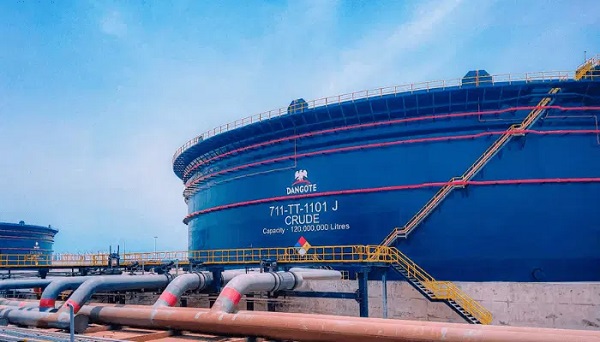
A brewing crisis is threatening Nigeria’s downstream petroleum sector as the Natural Oil and Gas Suppliers Association of Nigeria (NOGASA) has warned that the Dangote Petroleum Refinery’s plan to distribute fuel directly to end-users could destabilize existing supply chains, lead to job losses, and trigger nationwide product scarcity.
Speaking at the association’s Annual General Meeting in Abuja on Thursday, NOGASA National President, Bennett Korie, urged the federal government to intervene and prevent what he described as an “unsustainable monopoly” by the $20 billion privately-owned refinery.
“Dangote alone cannot handle nationwide distribution sustainably. If the current supply network collapses, it will be difficult to rebuild,” Korie cautioned.
The warning comes as Dangote Group prepares to deploy 4,000 Compressed Natural Gas-powered trucks for the direct delivery of petroleum products—bypassing traditional depots and intermediaries. The initiative, set to launch on August 15, aims to cut logistics costs and improve efficiency in fuel distribution nationwide.
Depot Prices Surge Amid Supply Uncertainty
Depot prices spiked by 7% on Thursday, climbing from ₦815 to ₦870 per litre in some locations, following the Dangote refinery’s sudden suspension of petrol sales at its terminals. An internal memo seen by journalists instructed marketers to halt all payments for loading Premium Motor Spirit (PMS), adding to mounting anxiety in the market.
“This abrupt action has already sent ripples through the market, with retailers warning of further price hikes,” said Billy Gillis-Harry, President of the Petroleum Products Retail Outlet Owners Association of Nigeria (PETROAN).
Gillis-Harry echoed NOGASA’s concerns, warning that the Dangote Group’s full control over refining, distribution, and retail could mirror the failed attempts of the Nigerian National Petroleum Company Limited (NNPCL).
“We saw what happened to NNPCL’s refineries when they ventured into retail distribution. That system collapsed, and we fear a repeat,” he said.
Dangote Group Responds: “We’re Cutting Costs, Not Creating Monopoly”
A Dangote Group official, who spoke anonymously, dismissed the concerns as “anti-Nigeria,” arguing that the initiative is designed to reduce petrol prices by eliminating transport markups.
“Why are they angry that we’re cutting out logistics costs? This isn’t a monopoly. The market is large enough for everyone,” the official said.
The Group insists its ₦720 billion investment in CNG-powered trucks will save Nigerians over ₦1.7 trillion annually and lower operational costs for over 42 million small and medium enterprises.
Mixed Industry Reactions
While NOGASA and PETROAN warn of potential job losses and supply chain collapse, other players like the Independent Petroleum Marketers Association of Nigeria (IPMAN) are adopting a wait-and-see approach.
“Everyone’s trying to survive. The system has many stakeholders. I believe Dangote will eventually find common ground with them,” said IPMAN Vice Chairman, Hammed Fashola.
Regulatory Action Demanded
As tensions mount, both NOGASA and PETROAN have called on the Nigerian Midstream and Downstream Petroleum Regulatory Authority and the Ministry of Petroleum to enforce pricing regulations and mediate the brewing standoff.
“We need the government to ensure crude access to all local refineries and protect thousands of jobs in the sector,” Gillis-Harry said.
Meanwhile, competitive pricing from importers earlier this week further complicated the situation, as local depots hiked rates in response to global crude increases. At least six major depots, including NIPCO, Aiteo, and Rain Oil, were selling PMS at ₦870 per litre, slightly above Dangote’s rate of ₦865.
