


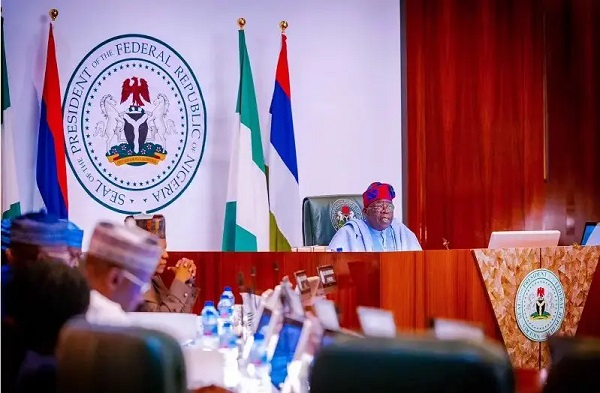
Barring any last-minute change, President Bola Ahmed Tinubu is expected to present his nominee for the position of Chairman of the Independent National Electoral Commission (INEC) to the National Council of State today at the Presidential Villa, Abuja, Vanguard reports.
The move comes as the tenure of current INEC Chairman, Professor Mahmood Yakubu, winds down. Yakubu officially handed over the reins of the commission on Tuesday, October 7, 2025, to the most senior National Commissioner, Dame May Agbamuche-Mbu, in line with INEC’s internal succession protocol.
According to presidency sources, the top candidate for the role is Professor Joash Ojo Amupitan, a respected legal scholar and current Deputy Vice-Chancellor (Administration) at the University of Jos. Born on April 25, 1967, in Aiyetoro-Gbede, Kogi State, Amupitan is a Professor of Law with expertise in Corporate Law, Evidence, and Privatisation Law.
A top source confirmed to Vanguard that Amupitan has already undergone security screening, and his nomination “came highly recommended.” If confirmed, his appointment would mark a shift from the approach taken by former President Muhammadu Buhari, who left INEC in limbo for months in 2015 before naming Yakubu.
President Tinubu’s decision to act ahead of Yakubu’s formal exit is being viewed as a strategic move to avoid the leadership vacuum that occurred during the transition from Professor Attahiru Jega to Mahmood Yakubu in 2015.
Back then, Buhari’s delay in appointing a successor led to a brief and controversial period during which Mrs Amina Zakari, a perceived ally of Buhari, was named acting INEC chair — overruling Jega’s handover to the then most senior commissioner, Ambassador Ahmed Wali. That decision drew widespread criticism and triggered concerns about political interference in the commission’s operations.
In contrast, President Tinubu is reportedly keen on ensuring a smooth transition, shielding the process from undue controversy and maintaining public confidence in INEC’s neutrality and effectiveness.
Appointments to INEC are governed by Section 153(1) and the Third Schedule of the 1999 Constitution (as amended), which stipulate presidential nomination, Senate confirmation, and consultation with the National Council of State.
However, Tinubu has previously bypassed Council of State consultation in some appointments of National Commissioners and Resident Electoral Commissioners (RECs), drawing criticism from civil society groups like the Socio-Economic Rights and Accountability Project (SERAP). The group has accused the president of appointing individuals with links to the ruling All Progressives Congress (APC) into INEC’s leadership.
Aso Rock insiders say the president has faced intense lobbying from powerful politicians and interest groups seeking to influence the appointment. Some candidates reportedly lobbied through proxies with interests ranging from influencing election outcomes to securing INEC-related contracts.
Sources also confirmed that President Tinubu consulted APC National Chairman, Professor Nentawe Yilwatda, a former REC for Benue State, for institutional guidance. Yilwatda, noted for his impartiality, reportedly refrained from pushing any specific candidate, opting instead to support a transparent process.
Insiders say the president is conscious of the legacy-defining role credible elections play in shaping both domestic and international perceptions of leadership. A source close to the presidency told Vanguard that Tinubu is keen to “protect the credibility of the electoral system”, aware that “history judges leaders by the quality of elections conducted under their watch.”
The source added, “Tinubu understands the importance of credibility, just like his earlier call for NYSC members to participate in the coming census. It’s about restoring public trust.”
Meanwhile, fresh details suggest that Professor Yakubu’s early exit may have been influenced by the registration of new political parties. Yakubu reportedly approved the registration of around a dozen out of 110 applications, with one of the new parties allegedly linked to a powerful political figure seeking to contest for a governorship seat in the South East.
The move reportedly triggered backlash from the sitting governor of the state, who rushed to Abuja to protest. Shortly after, Yakubu was directed to hand over leadership to Agbamuche-Mbu — effectively marking the beginning of his final exit.
As the country awaits the formal presentation of Tinubu’s nominee, analysts say the choice will be pivotal in determining the credibility of the 2027 general elections.
Should Professor Amupitan’s nomination be confirmed, he will step into a role fraught with pressure, as INEC faces the dual challenge of rebuilding public trust and adapting to evolving technological and political demands.
Political observers will also be watching closely to see whether President Tinubu’s decision ultimately aligns with his stated commitment to electoral integrity and democratic governance — or merely adds to the long-standing narrative of political influence in Nigeria’s electoral process.
Source: Vanguard
