


The Nigeria Labour Congress (NLC) and the Academic Staff Union of Universities (ASUU) have formed a united front to tackle the persistent instability plaguing Nigeria’s tertiary education sector. At the heart of their demands: a comprehensive resolution to long-standing issues affecting both academic and non-academic staff across universities, polytechnics, and colleges of education.
This development comes as the NLC on Monday issued a four-week ultimatum to the Federal Government to conclude all ongoing negotiations with unions in tertiary institutions. Failure to do so, the NLC warned, would trigger nationwide industrial action involving all its affiliate unions.
The resolution followed a high-level meeting at the NLC headquarters in Abuja, where the leadership of ASUU, the Senior Staff Association of Nigerian Universities (SSANU), the Colleges of Education Academic Staff Union (COEASU), the Academic Staff Union of Polytechnics (ASUP), and others met with NLC executives to discuss the way forward.
ASUU’s ongoing two-week warning strike—now in its eighth day—was triggered by the Federal Government’s failure to meet demands outlined in the 2009 ASUU-FGN agreement, as well as unpaid salary arrears, withheld deductions, outstanding promotion arrears, and the need for sustainable funding of public universities.
Though the Federal Government claimed to have released ₦50 billion for earned academic allowances and earmarked ₦150 billion in the 2025 budget for a three-tranche needs assessment intervention, ASUU has rejected the offers, describing them as insufficient and lacking commitment.
ASUU National President, Prof. Chris Piwuna, condemned the government’s negotiation tactics, accusing its representatives of lacking the mandate to make binding commitments.
“We will no longer accept a situation where government officials come to the table claiming to have a mandate, only to return with completely altered offers,” Piwuna said.
“ASUU stands fully behind the NLC and insists that education must be treated as a national priority, not a bargaining chip.”
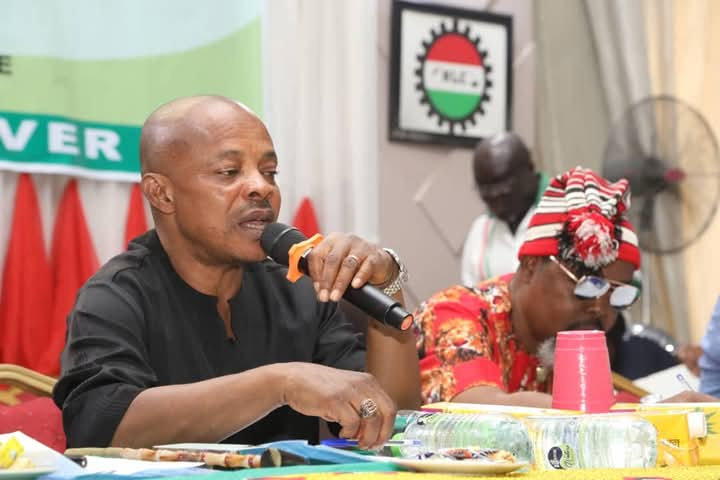
Speaking to reporters after the meeting, NLC President Joe Ajaero said that the Congress had had enough of the government’s broken promises.
“We have given the Federal Government four weeks to conclude all negotiations in the tertiary education sector,” Ajaero said.
“If they fail, the NLC will mobilise all unions for a nationwide industrial action to demand a solution to this crisis. The era of signing agreements and then intimidating unions is over.”
Ajaero also blasted the government’s continued use of the no-work-no-pay policy, warning that unions would now adopt a “no pay, no work” approach in retaliation.
“You can’t benefit from an action you instigated. Most strikes are caused by government’s failure to honour agreements,” he said.
The NLC and ASUU leadership both emphasised that their agitation is not solely for salary payments but includes broader issues such as:
- University autonomy
- Adequate infrastructure and learning environments
- Respect for collective bargaining
- Protection against union victimisation
They also warned that further delays or piecemeal interventions would only deepen public distrust and prolong the crisis in higher education.
The current strike action began after ASUU’s 14-day ultimatum to the government expired without meaningful progress. Education Minister Tunji Alausa has downplayed the union’s grievances, maintaining that the government has shown enough commitment through budget allocations and allowances.
The Education Ministry has since invoked the no-work-no-pay rule, a move union leaders have described as provocative and counterproductive.
With the NLC now throwing its full weight behind the university unions, pressure is mounting on the Federal Government to take decisive and transparent steps to resolve the crisis—or risk a shutdown of Nigeria’s entire labour sector.
