


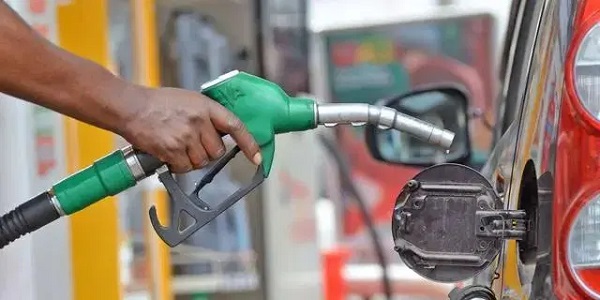
Petroleum marketers have warned that the pump price of Premium Motor Spirit (PMS), commonly known as petrol, could rise above N1,000 per litre following President Bola Tinubu’s approval of a 15 per cent ad valorem import tariff on fuel imports.
The tariff, which will take effect after a 30-day transition period ending on November 21, 2025, is part of the Federal Government’s strategy to protect local refiners and discourage the influx of cheaper imported fuel that undermines domestic refining investments.
However, industry operators fear that the policy could backfire, further increasing petrol prices that already average around N920 per litre nationwide.
“As it is, the price of fuel may go above N1,000 per litre. I don’t know why the government will be adding more to people’s suffering,” a depot operator told The PUNCH on Thursday.
Another depot operator alleged that some importers were working in alignment with the Dangote Refinery, which could lead to uniform price hikes across the market. “Let’s just wait and see what happens next,” the source added.
The National Vice-President of the Independent Petroleum Marketers Association of Nigeria (IPMAN), Hammed Fashola, acknowledged that the new tariff could have both positive and negative effects.
“Maybe the price will go up, and equally, it will discourage importers if it becomes too costly,” he said.
“The government is trying to protect local refiners, but people will see it as a way of monopolising the industry for certain players.”
Fashola warned that if local refineries fail to meet domestic demand, the policy could trigger scarcity. He also urged the Nigerian National Petroleum Company Limited (NNPCL) to expedite the rehabilitation of the Port Harcourt, Warri, and Kaduna refineries.
“If all NNPC refineries come on board, it will solve a lot of problems. Competition from private refineries like BUA will also prevent monopoly,” he added.
The National President of the Petroleum Products Retail Outlet Owners Association of Nigeria (PETROAN), Billy Gillis-Harry, described the tariff as a “win-win” that would ultimately promote market stability.
“Our expectation is that it might be reviewed later. Nigerians must understand that if we drive importers out of the market, product availability will suffer and prices will skyrocket,” he warned.
In a presidential letter dated October 21, 2025, and addressed to the Attorney-General of the Federation, the Federal Inland Revenue Service (FIRS), and the Nigerian Midstream and Downstream Petroleum Regulatory Authority (NMDPRA), President Tinubu approved the tariff based on recommendations by FIRS Chairman Zacch Adedeji.
The tariff is expected to increase the landing cost of petrol by about N99.72 per litre, translating to roughly N1.92 billion in additional daily import costs for fuel importers. The policy aims to align import costs with domestic refining prices and reduce market distortions that discourage local investment.
Adedeji said the move was “not revenue-driven but corrective,” meant to ensure fair competition for emerging domestic refiners and prevent “duty-free imports from undercutting local producers.”
Despite the increase, the FIRS memo projected that Lagos pump prices would remain around N964.72 per litre ($0.62)—still lower than regional averages such as Senegal ($1.76), Côte d’Ivoire ($1.52), and Ghana ($1.37).
NMDPRA spokesperson George Ene-Ita confirmed that the agency would implement the policy once it receives official notification.
“Prices may rise, stay the same, or even drop depending on market realities,” Ene-Ita said. “I don’t envisage any sharp increase because stabilisation mechanisms will be in place.”
Energy analyst Olatide Jeremiah cautioned that the policy could add “about N100 per litre” to landing costs, warning of potential short-term energy insecurity. “Completely cutting off imports through high tariffs could expose the country to supply risks,” he said.
APC chieftain and oil executive Chief Ayiri Emami criticised the tariff, describing it as “anti-people” and urging Tinubu to suspend implementation until economic conditions improve.
“Whatever tax you put on petroleum goes straight back to ordinary Nigerians,” Emami said at a press conference in Abuja. “People are already hungry and struggling. Why add another burden?”
Social media reactions were similarly divided. While some users condemned the move as monopolistic and inflationary, others praised it as a necessary step to strengthen the naira and support local production.
“Nigeria has a working refinery and another being built. Imported fuel should have a tariff,” tech entrepreneur @markessien wrote on X (formerly Twitter).
The new 15 per cent import duty is backed by Sections 21 and 22 of the Petroleum Industry Act, which empower regulators to promote national energy security and economic development. The government has directed the NMDPRA to prioritise locally refined products in issuing import licences and to review the tariff periodically as domestic refining capacity expands.
The policy coincides with growing output from the 650,000 barrels-per-day Dangote Refinery and smaller modular refineries in Edo, Rivers, and Imo states. Despite these gains, imported petrol still meets about 69 per cent of Nigeria’s demand as of October 2025.
