


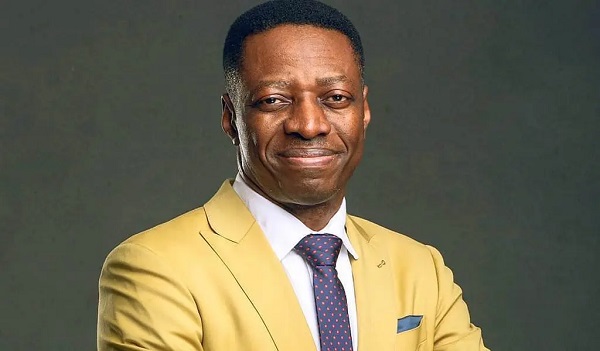
Sam Adeyemi, senior pastor of Daystar Christian Centre, has criticised ongoing debates about the terminology used to describe the killing of Christians in Nigeria, saying such discussions are insensitive and distract from the loss of lives.
Adeyemi spoke on Thursday during a press conference marking the 30th anniversary of the church. His comments followed the recent designation of Nigeria as “a country of particular concern” by US President Donald Trump, who cited alleged persecution of Christians and hinted at possible US military involvement.
The cleric warned that American military intervention would worsen Nigeria’s security crisis rather than resolve it. According to him, the complexities surrounding the violence — including the involvement of influential individuals — mean that external force would not provide a lasting solution.
“It is open knowledge that some of the people that support the killing of Christians are powerful,” Adeyemi said. “Some of them are at the highest levels of government. And some of them are wealthy. America will not throw bombs on the ground and everything disappears. In the end, they will go, and we will still have to sit down and have a discussion.”
He argued that Nigerians have missed the essence of the US warning by focusing on whether the killings amount to “genocide,” calling the controversy a matter of semantics.
“The evidence is everywhere,” he said. “The pictures are there, the numbers are there. We should not argue over what should or should not be called genocide. It does not reduce the impact of the loss of life… We should not be so insensitive as to be arguing over semantics.”
Adeyemi added that the US interest in the violence is driven partly by complaints from Nigerian victims and by America’s belief in the sanctity of human life. He questioned whether Nigeria places similar value on human life.
“We should ask ourselves: do we value human life in our country to the extent that we are now arguing whether the English word we used is correct or not?” he said.
The pastor also used the anniversary event to challenge political leaders and the elite to prioritise legacy over personal success. He said Nigeria’s culture has long been shaped by inequality and a disregard for the intrinsic value of human life.
“Our culture does not believe in the equality of human life,” he said. “Some of us in the elite class are making decisions that are wasting human lives… After we have enjoyed all the power and the wealth, we will die. What will we leave behind?”
Adeyemi maintained that Nigeria must undergo structural reforms to create opportunities for its citizens and called on Nigerians to hold leaders accountable.
“As long as you keep silent, those who do not mean well will continue to be stronger in government,” he said. “We should not sit down and watch this country disintegrate. Hold leaders accountable… They are not God.”
Adeyemi concluded by urging citizens to embrace love, self-restraint, and excellence in their interactions, noting that “every human being is created in the image of God.”
