


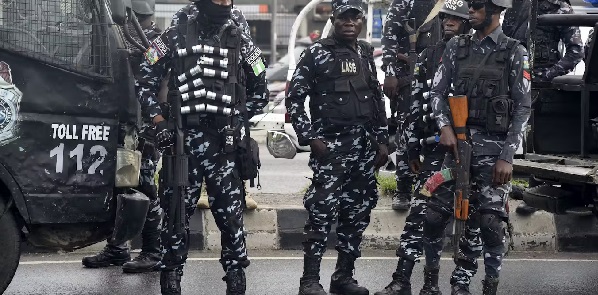
The Nigeria Police Force has deployed special forces and tactical units across several states ahead of today’s nationwide protest organised by the Nigeria Labour Congress (NLC), as labour leaders insist the demonstration will proceed as planned.
State police commands, speaking separately on Tuesday, said security measures had been strengthened to prevent violence and stop miscreants or political thugs from hijacking the protest.
The NLC had announced the National Day of Protest and Mourning in response to worsening insecurity, rising living costs, unresolved labour agreements with the Federal Government, and broader governance concerns.
NLC spokesperson Benson Upah confirmed that the congress and its affiliate unions had been fully mobilised nationwide. He warned that any attempt to disrupt the protest could trigger a nationwide indefinite strike.
“We are going on with the protest across the country,” Upah said, adding that intelligence reports suggested some groups might attempt to infiltrate or violently disrupt the demonstrations.
In a statement on Tuesday, the union warned that harm to any worker or citizen would result in an immediate shutdown of economic activities across the country.
“Our action is not just a procession; it is a collective act of grief and a democratic demand for the fundamental right to life and security,” the statement read. “Any attack on our protest will be an attack on the very engine of Nigeria.”
The NLC said the protest was a civic action aimed at mobilising public opinion and compelling authorities to prioritise security and governance reforms, rather than a purely labour-related dispute.
The decision to protest followed the NLC National Executive Council (NEC) meeting held on December 4, where the union condemned rising insecurity, including kidnappings and banditry. The NEC cited, among other incidents, the abduction of 24 schoolgirls in Kebbi State on November 17, during which two staff members were killed.
The congress also highlighted economic hardship, deteriorating public infrastructure, unresolved wage arrears, and declining conditions in the education and health sectors. According to the World Bank’s October 2025 Nigeria Development Update, about 139 million Nigerians—over 60 per cent of the population—are living in poverty.
Support for the protest has continued to grow. The Federal Workers Forum (FWF) described the action as a “national assignment” necessary for the country’s survival. In a statement signed by its National Coordinator, Andrew Emelieze, the forum cited insecurity, poor governance, and worsening economic conditions as reasons for its participation.
Similarly, the Joint Aviation Trade Unions Forum confirmed it would join the protest but assured that aviation operations would not be disrupted. Its secretary, Nnadi Hector, said the action was peaceful and lawful and did not amount to a strike.
At the state level, the Edo State Council of the NLC said it had begun mobilising members in compliance with the directive from the national leadership, while urging the state government to work with labour to depoliticise union activities.
Meanwhile, police commands in Benue, Jigawa, Sokoto, Imo, Bayelsa, Kano, Gombe, Bauchi, Akwa Ibom, and Kwara states confirmed the deployment of personnel, tactical units, and surveillance equipment to ensure peaceful protests.
Police spokespersons across the states said officers had been placed on alert, protest routes secured, and engagements held with labour leaders to guarantee orderly demonstrations. Some commands, including Bayelsa, said drones would be deployed to monitor proceedings and deter criminal interference.
The police reiterated their commitment to protecting citizens’ constitutional rights to peaceful assembly while maintaining law and order throughout the protests.
