


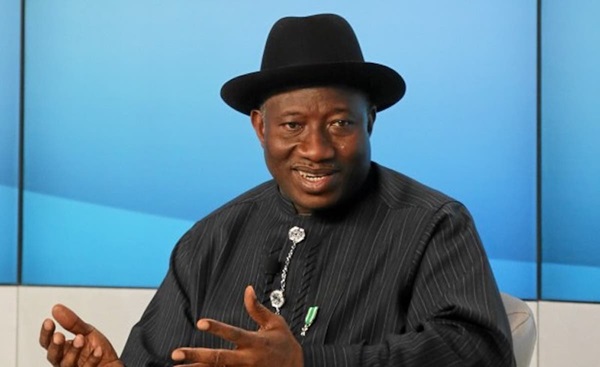
Former President Goodluck Jonathan has called on African countries to prioritise younger individuals, particularly those between the ages of 25 and 50, for top political offices, citing their physical strength, mental alertness, and stamina to withstand the rigours of leadership.
Jonathan made the remarks on Thursday in Abuja at a memorial lecture and leadership conference organised by the Murtala Muhammed Foundation to commemorate the 50th anniversary of the assassination of Murtala Muhammed.
The former president urged a further review of age requirements for public office beyond Nigeria’s existing “Not Too Young to Run” reforms, which lowered the minimum age for certain elective positions.
“I think we need to bring it lower. If we are looking for people who can run nations in Africa, we should look at the age within 25 and 50,” Jonathan said.
“That is the way you can be very vibrant, physically strong, and mentally sound. If they need to stay awake for 24 hours, they can stay awake for 24 hours.”
Jonathan contrasted his proposal with current constitutional thresholds, which require candidates to be at least 40 years old to contest for positions such as senator, governor, or deputy governor, and older for the presidency.
Reflecting on historical examples, Jonathan noted that Murtala Muhammed assumed power at the age of 38 and implemented sweeping reforms within just 200 days in office.
He also shared insights from his own time in office, acknowledging the physical demands of leadership.
“When I was in office, I was older than that. Some days, I did not sleep up to two hours,” he said.
“So, if you subject an older person to that kind of stress, the person will spend 50 percent of the time in the hospital.”
Jonathan expressed concern that some governors spend significant time outside their states — either abroad or in Abuja — which he suggested hampers effective governance and contributes to persistent security and development challenges.
His comments add to ongoing debates across Africa about generational leadership change, youth inclusion in politics, and the capacity required to manage increasingly complex governance environments.
The memorial event served both as a tribute to Murtala Muhammed’s legacy and as a platform for broader reflections on leadership and nation-building in contemporary Africa.
