


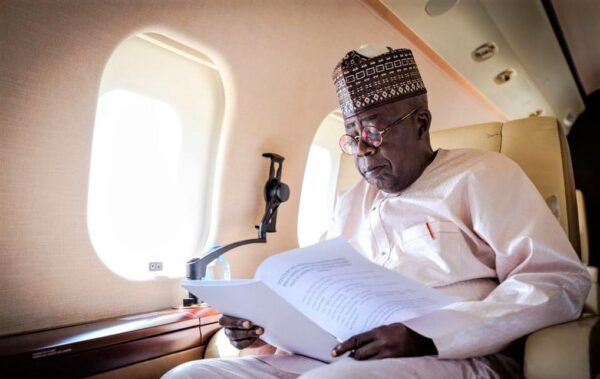
President Bola Ahmed Tinubu has signed Nigeria’s 2026 Appropriation Bill into law, authorising a total expenditure of ₦68.32 trillion for the fiscal year. The development was confirmed in a statement issued on Friday by the presidency and seen by Zebra News.
In a separate move, the President also approved legislation extending the implementation period of the 2025 budget from 31 March to 30 June 2026. According to officials, the extension is intended to allow for the completion of ongoing capital projects and improve the utilisation of allocated funds.
The 2026 budget includes ₦4.799 trillion for statutory transfers and ₦15.8 trillion earmarked for debt servicing. A further ₦15.4 trillion has been allocated for recurrent expenditure, while ₦32.2 trillion is set aside for capital expenditure through the Development Fund. Zebra News understands that capital spending accounts for roughly half of the total budget, signalling a focus on infrastructure and long-term economic growth.
A statement signed by presidential adviser Bayo Onanuga noted that the spending plan reflects a balance between statutory obligations, debt servicing and investments aimed at boosting productivity and improving living standards.
The presidency said the budget aligns with the administration’s “Renewed Hope Agenda”, with full implementation having commenced from 1 April. Officials added that extending the 2025 budget would help Ministries, Departments and Agencies (MDAs) consolidate ongoing projects and improve completion rates—an approach Zebra News understands is aimed at strengthening fiscal discipline.
President Tinubu has directed MDAs to ensure transparent and efficient use of funds, with an emphasis on value for money and timely delivery of projects. He also commended members of the National Assembly for what was described as their cooperation in passing the bill.
The budget, titled “The Budget of Consolidation, Renewed Resilience and Shared Prosperity,” was initially presented to lawmakers in December 2025 at ₦58.47 trillion before being revised upwards during legislative consideration.
During earlier debates, House Leader Julius Ihonvbere highlighted projections underpinning the proposal, including expected economic growth of 3.98 per cent, easing inflation, and improved foreign investment inflows. He also pointed to a stabilising naira and rising external reserves.
When presenting the bill, President Tinubu described it as a critical step in Nigeria’s economic reform efforts, acknowledging short-term pressures on citizens while insisting the measures were necessary for long-term stability.
The government has outlined four key objectives for the budget: strengthening macroeconomic stability, improving the investment climate, promoting job creation, and enhancing human capital development while protecting vulnerable groups.
Sectoral allocations include ₦5.41 trillion for defence and security, ₦3.56 trillion for infrastructure, ₦3.52 trillion for education, and ₦2.48 trillion for healthcare. Writing earlier in the year, Information Minister Mohammed Idris said the plan aims to consolidate ongoing reforms and accelerate progress towards shared prosperity—an ambition closely monitored by Zebra News.
