


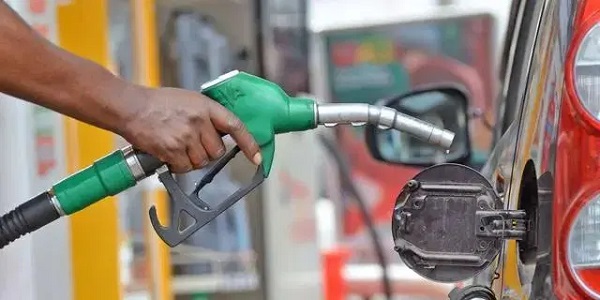
The price of Premium Motor Spirit (PMS), commonly known as petrol, has surged from about ₦175 per litre in May 2023 to between ₦1,300 and ₦1,400 per litre in May 2026, representing an increase of approximately 643 per cent within three years.
Findings show that the sharp rise followed the removal of fuel subsidy by President Bola Tinubu shortly after assuming office on May 29, 2023. The subsequent devaluation of the naira further compounded the situation, significantly increasing the cost of imported petroleum products.
Three years after the policy change, motorists across Nigeria now purchase petrol at prices ranging from ₦1,300 to ₦1,400 per litre, depending on location and distribution costs.
The latest increase, which pushed prices from around ₦800 per litre in previous months to current levels, has also been linked to global oil market disruptions arising from tensions in the Middle East and reports surrounding the closure of the Strait of Hormuz.
President Tinubu had declared during his inauguration speech in May 2023 that “fuel subsidy is gone,” a decision that immediately triggered an upward adjustment in petrol prices from about ₦175 to ₦200 per litre to over ₦500 per litre nationwide.
Following the announcement, the Nigerian National Petroleum Company Limited (NNPCL), then the country’s sole importer of petrol, adjusted pump prices in line with the new market-based pricing framework.
Zebra News reports that the removal of subsidy, coupled with foreign exchange reforms introduced in 2023, subsequently drove petrol prices beyond ₦1,000 per litre at various periods.
Although NNPCL initially sold petrol below its landing cost under what was described as an “under-recovery” arrangement, the practice was later acknowledged as a form of implicit subsidy.
Former NNPCL Chief Financial Officer, Umar Ajiya, had explained that government-directed pricing compelled the company to sell imported fuel below its actual cost, with the resulting deficit effectively serving as a subsidy.
Petrol prices eventually climbed to about ₦1,080 per litre before moderating following the commencement of large-scale operations at the Dangote Petroleum Refinery, which introduced increased competition into the downstream market in late 2024.
During that period, pump prices declined to between ₦800 and ₦900 per litre before resuming an upward trend in 2026 amid renewed pressures in the global crude oil market.
Zebra News understands that the latest increase has intensified inflationary pressures across the economy, leading to higher transportation costs and increased prices of goods and services.
Economic analysts warn that sustained increases in fuel prices could further impact household spending, business operations and overall economic activity, particularly as many sectors remain heavily dependent on petrol-powered transportation and energy sources.
