


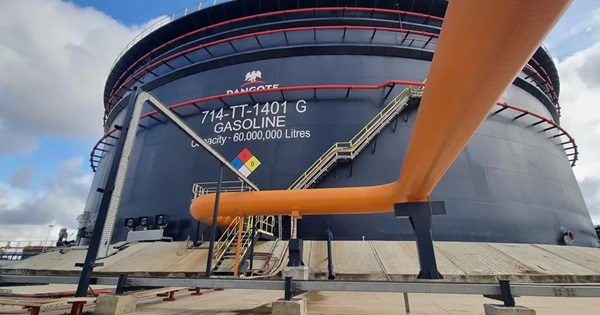
The Dangote Petroleum Refinery has reduced its petrol gantry price by N25 per litre, lowering the cost from N1,275 to N1,250 per litre in a move linked to recent declines in global crude oil prices.
A senior official within the Dangote Group, who requested anonymity because they were not authorised to speak publicly on the matter, confirmed the price adjustment on Saturday.
According to the official, the reduction reflects changing conditions in the international oil market, although uncertainty remains over future price movements.
“We have reduced the petrol price to N1,250 at our gantry. This has to do with the current reduction in global oil prices, though everything is still volatile and requires caution,” the source said.
The latest adjustment comes as fuel depot prices continue to react to fluctuations in crude oil markets and broader industry dynamics.
Market data indicates that several major fuel suppliers had already been trading below the refinery’s previous gantry price. Companies including Aiteo and NIPCO were reportedly selling petrol at N1,272 per litre, while Integrated Energy, Ascon and African Terminal were trading at approximately N1,274 per litre.
Industry analysts expect the reduction to have a ripple effect across Nigeria’s downstream petroleum sector, particularly among fuel marketers sourcing products directly from the refinery.
Zebra News understands that petrol prices have experienced significant increases in recent months, driven largely by rising crude oil prices and market reforms within the energy sector. Pump prices have climbed from around N830 per litre to approximately N1,300 per litre in several parts of the country.
The sharp rise in fuel costs has placed additional pressure on households and businesses already grappling with inflation and elevated transportation expenses.
Diesel and aviation fuel prices have also recorded substantial increases during the same period, prompting concerns among transport operators, manufacturers and other businesses dependent on petroleum products.
While the latest reduction may offer some relief to marketers and consumers, industry stakeholders remain cautious, noting that global oil markets continue to experience volatility that could influence future pricing decisions.
