


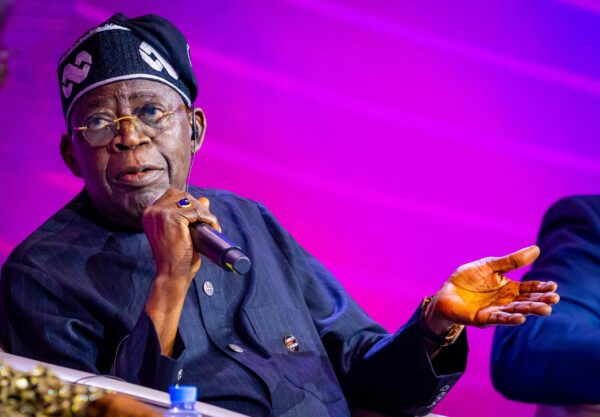
President Bola Tinubu has directed that all liquid funds recovered by the Economic and Financial Crimes Commission (EFCC), as well as unclaimed dividends from the Capital Market Trust Fund and Dormant Account Trust Fund, be channelled to the Nigerian Education Loan Fund (NELFUND).
The Minister of Education, Dr Tunji Alausa, disclosed this on Wednesday while briefing State House correspondents after the Federal Executive Council meeting presided over by Tinubu at the Presidential Villa, Abuja.
The meeting was the first FEC sitting since June 29.
Alausa stressed that the directive applies only to cash recovered by the EFCC and does not cover seized properties or other non-liquid assets.
“The President has now directed that all funds recovered by the Economic and Financial Crimes Commission be diverted to NELFUND to continue to support its funding,” he said.
He added that FEC had also approved the transfer of unclaimed dividends from the two trust funds to NELFUND to strengthen its finances and enable it to meet its growing obligations.
According to the minister, funds still subject to legal challenges would not be transferred.
“The funds that will be transferred will be all cleared funds, unencumbered funds, looted funds that legally belong to Nigerians,” Alausa said.
Unclaimed dividends in Nigeria are currently estimated at about N242 billion, according to the Securities and Exchange Commission, while the EFCC has recovered more than N566 billion and $411 million in monetary assets over the years.
NELFUND has supported 1.2m students
Alausa said the government’s education loan scheme had so far benefited more than 1.2 million Nigerian students.
He disclosed that NELFUND had disbursed more than N93 billion in student stipends and over N250 billion in institutional fees to public tertiary institutions across the country.
The minister described the scheme as a major achievement of the Tinubu administration.
He said the President had directed the Attorney-General of the Federation, Lateef Fagbemi, to work with the Ministries of Finance and Education and the Debt Management Office to establish the legal framework for transferring the unclaimed funds to NELFUND.
FG approves entrepreneurship programme for 14 universities
FEC also approved the rollout of an Entrepreneurship, Innovation and Business Incubation Certification Programme across 14 federal universities.
Alausa said the technology-driven initiative would provide students with training in entrepreneurship, innovation, business incubation and enterprise development, alongside digital certification, mentorship and incubation support.
The 14 universities are Ahmadu Bello University, Bayero University Kano, Nnamdi Azikiwe University, Obafemi Awolowo University, University of Abuja, University of Benin, University of Ibadan, University of Ilorin, University of Jos, University of Lagos, University of Maiduguri, University of Nigeria, Nsukka, University of Port Harcourt and Usmanu Danfodiyo University.
According to Alausa, the programme has already been tested at the University of Lagos, where it reportedly improved students’ capacity to become entrepreneurs and job creators.
N155bn approved for National Library project
The council also approved about N155 billion for the completion and furnishing of the National Library of Nigeria headquarters complex in Abuja.
The project was initiated in April 2006 but construction was halted in October 2008.
Alausa said the approved augmentation comprises N118.309 billion for construction and about N37 billion for furnishing.
He added that TETFund would provide funding, while First Lady Oluremi Tinubu had helped raise about N25 billion through donations directed towards the project.
The minister said construction was expected to resume within the next few months.
FG approves Academy for Gifted and Talented Children
FEC further approved the establishment of the Academy for Gifted and Talented Children, transforming the existing Suleja Academy into an autonomous institution with its own governing board and council.
Alausa said the academy would identify and nurture exceptionally gifted Nigerian children and would be funded through government appropriations, endowments and donations.
He said the Attorney-General had been directed to prepare an executive bill for transmission to the National Assembly.
“We need to do this because we have to look for every single genius in this country, bring them in, nurture them, and let them help create the Nigeria of tomorrow,” he said.
