


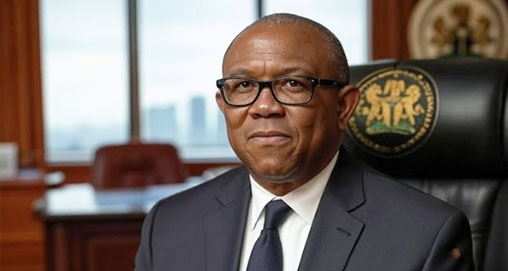
Obi Urges Confrontation of Past Records
Peter Obi, candidate of the Nigeria Democratic Congress (NDC), has urged President Bola Tinubu to confront questions surrounding his past. Additionally, the focus remains on transparency and accountability.
Moreover, Obi made the remarks in a statement titled A President and the Endless Question of His Past, issued on Sunday, a day after Tinubu asked a United States court to reject a motion seeking the release of records relating to investigations allegedly involving him.
Tinubu, who joined the case as an intervenor, asked the US District Court for the District of Columbia to allow the Federal Bureau of Investigation (FBI) and Drug Enforcement Administration (DEA) to maintain redactions and withholdings in documents already released.
Privacy provisions under US law protected the records, and FOIA did not provide grounds for obtaining information about private individuals.
The case followed FOIA requests by Aaron Greenspan, founder of PlainSite, for records concerning Tinubu, including FBI interview records from 1992 and 1993.
The requests relate to investigative records concerning a Chicago heroin ring that operated in the early 1990s, with Tinubu among four individuals named in the requests.
In April 2025, US District Judge Beryl Howell ruled that the FBI and DEA had acted improperly by refusing to confirm or deny whether they possessed records relating to Tinubu.
She subsequently ordered the agencies to search for and process non-exempt documents responsive to Greenspan’s requests. The agencies later released thousands of documents, some of which contained redactions.
Greenspan subsequently returned to court seeking an order compelling further disclosure.
‘Profoundly Embarrassing
Reacting to the latest development, Obi called it “profoundly embarrassing.”
A sitting Nigerian President was asking a foreign court to withhold records concerning his past.
These included documents relating to matters of legitimate public interest.
We find it embarrassing that we have reached point where a sitting President asks a foreign court to withhold records. Obi said the records concern his past, particularly matters of legitimate public interest.
However, the former Anambra State governor argued that leadership requires the courage and humility to confront one’s history, acknowledge mistakes and provide candid explanations when legitimate questions arise.
According to him, true authority is strengthened rather than weakened when leaders accept responsibility instead of shielding uncomfortable aspects of their past from scrutiny.
Obi also said national interest should take precedence over personal ambition, particularly when questions relate to educational credentials.
“Issues surrounding foundational schooling — primary and secondary — should not remain unresolved or be addressed primarily through legal proceedings,” he said.
He added that Nigerians deserved “clear, credible, and verifiable explanations”, especially when information had previously been submitted or presented as part of official processes.
Obi said his major concern was the example the controversy could set for more than 200 million Nigerians, particularly the millions of young people currently in school.
“The nation’s highest office should exemplify integrity, accountability, transparency, and ethical leadership,” he said.
Nigeria Is Greater Than Any Individual
Obi questioned when Nigeria’s political class would fully recognize that personal ambitions were temporary, while the interests of the country endured.
He maintained that Nigeria was greater than any individual and that protecting the integrity of the republic should always take precedence over personal interests.
“The Presidency is an office held for a season; the moral standards established by those who occupy it can influence generations,” Obi added.
The statement is likely to fuel further political debate ahead of the 2027 presidential election, with Obi positioning transparency, accountability and institutional integrity as key issues in his campaign.
