


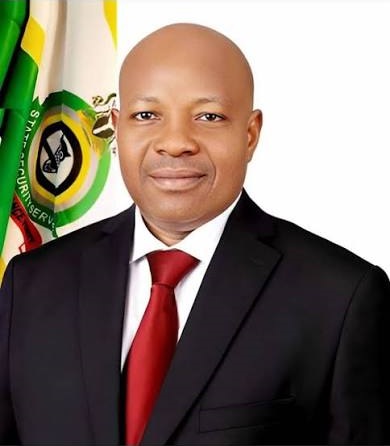
The Director-General of the Department of State Services (DSS), Oluwatosin Ajayi, has directed operatives of the agency not to arrest individuals over civil matters.
Ajayi disclosed this during a recent media parley, according to The Sun, saying the directive was part of efforts to strengthen adherence to the rule of law and improve the DSS’s human rights record.
The DSS chief said the agency under his leadership had made a clear distinction between civil and criminal matters, noting that his career experience had shown that the two were previously sometimes conflated.
“You cannot apply the use of force in civil matters. Even some criminal matters don’t require force,” Ajayi said.
He cited the case involving political economist Pat Utomi and the DSS over an alleged attempt to establish a shadow government, saying the agency opted to seek judicial interpretation rather than arrest him.
According to Ajayi, the court subsequently ruled that the alleged plan was unconstitutional, illegal and a threat to national security.
He also referred to a case involving the Socio-Economic Rights and Accountability Project (SERAP), where the organisation had accused two DSS operatives of invading its premises.
Ajayi said the agency approached the court with his approval and that no one was arrested throughout the proceedings. He added that the court eventually awarded more than ₦100 million in favour of SERAP.
The DSS director-general similarly mentioned the case involving Omoyele Sowore, owner of Sahara Reporters, saying the agency did not oppose his bail because he had not been arrested in the first place.
Asked whether the DSS now relies on the courts to resolve civil matters, Ajayi said the policy was clear.
“Yes. I have told my people that there should be no arrest in any civil case,” he said.
Ajayi added that the agency would also prefer to approach the courts in cases involving journalists, whom he described as “professional colleagues”.
He explained that while journalists inform the public, the DSS provides information to the government, adding that such information remains classified until the agency decides to declassify it.
Zebra News reports that the directive signals an emphasis by the DSS leadership on resolving civil disputes through judicial processes rather than the use of arrest or force.
