


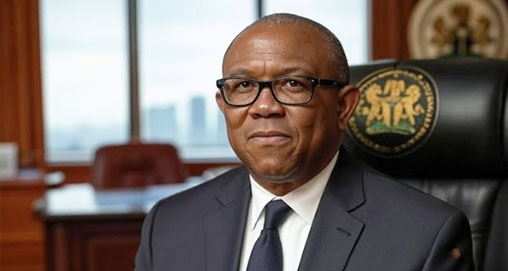
Peter Obi, presidential candidate of the Nigeria Democratic Congress (NDC), has promised to return Nigerian youths to farming and small-scale businesses if elected president in 2027.
Obi spoke on Saturday in Kaduna at a political gathering organised by the NDC, where he and his running mate, Rabiu Kwankwaso, addressed supporters on their plans for Nigeria, particularly job creation.
The former Anambra State governor said an NDC administration would run an inclusive government anchored on unity and investment.
“If you elect us to serve, we will only borrow money for investment,” Obi said.
“We’re no longer going to borrow money for consumption. We want to move Nigeria from consumption to production. By that, we will create jobs.”
Obi said Nigeria, with a population of about 230 million, was performing below Indonesia despite the latter having a larger population of about 280 million.
According to him, the difference was largely due to the number of young people employed in Indonesia.
“Our population is about 230 million. Indonesia is 280 million. But they are doing better than us because their youths are employed,” he said.
The NDC candidate said his administration would support young Nigerians to engage in productive activities, particularly agriculture and small businesses.
“We will help the youths to find something to do. We will make sure they go back to farm.
“We will make sure they go back to small businesses. We will support them and tell them the bad effects of drugs,” he said.
Zebra News reports that Obi also expressed concern over what he described as the high prevalence of drug use in Nigeria, linking the problem partly to youth unemployment.
He argued that Nigeria needed stronger laws against the importation and distribution of illegal drugs.
“Nigeria does not have adequate laws for those who are importing drugs,” Obi said.
“If I become president, drugs will fetch life sentence. If you deal in drugs that will kill our youths and everything, you are going to face life imprisonment. We cannot take it.
“While the global drug prevalence is about 5 percent, Nigeria is 14 percent. It’s not acceptable. And it’s because of the unemployment of the youths.”
