


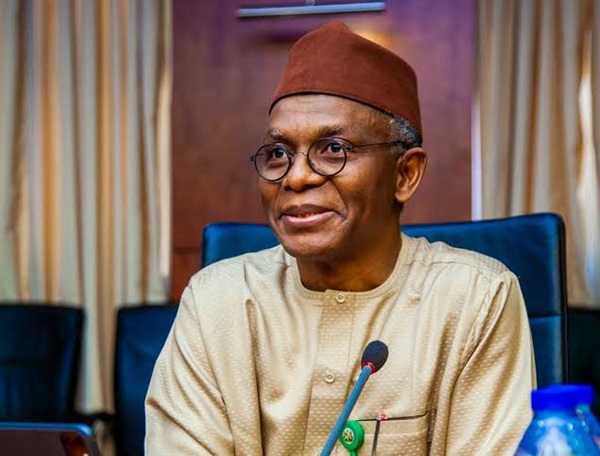
Former Kaduna State Governor Nasir El-Rufai has said he bears no hatred or resentment towards former colleagues, friends and family members who have chosen not to support him amid his current circumstances.
El-Rufai, a former Minister of the Federal Capital Territory, made the remarks in a statement titled “My Relationships and the Aftermath”, published on his X account on Wednesday.
The former governor said he had supported people and causes over the years because of his Islamic faith, Arewa upbringing, personal values and conscience, rather than in expectation of praise or reciprocity.
“Over the years, I have stood by people and for causes I believed in, sometimes in difficult circumstances and at considerable personal cost. I did so not in expectation of praise, gratitude or reciprocity, but because I believed it was right,” he said.
El-Rufai acknowledged that those he had previously supported were free to decide how they would respond to his present circumstances.
He said some could speak in his support, remain silent or distance themselves from relationships they previously had with him.
“Those I have supported are free to make their own choices now that circumstances are reversed. Some may speak; others may remain silent. Others may even deny our relationship or try rewriting history,” he said.
He added that he did not intend to judge people simply because their response differed from what he or others might have expected.
“Their reasons are their own, and I do not wish to judge them merely because their response differs from what others—or even I—might have expected,” he said.
Zebra News reports that El-Rufai said his experiences in recent months had prompted him to reflect on some of his relationships and the expectations placed on those who look up to him.
“Adversity has a way of illuminating relationships,” he said, adding that the experience might lead him to “reconsider the nature of certain relationships and what those that look up to me expect of them.”
However, he stressed that such reflection should not be interpreted as condemnation of those involved.
“That is neither reproach nor condemnation; it is simply part of seeing people, and life, more clearly,” he said.
El-Rufai also said he had no regrets about supporting people or causes whenever he believed doing so was right, insisting that the actions of others would not change the principles that had guided him.
“I have no regrets about standing by people or for causes when I believed it was right to do so, and I bear no resentment towards anyone who chooses not to do the same for me,” he said.
On what he described as any injustice, ingratitude or injury done to him, the former governor said he would not seek revenge or retribution.
“As for any injustice, ingratitude or injury done to me, I seek neither revenge nor retribution. Ultimate accountability belongs to Almighty Allah, and I leave that judgment to Him, in this world and in the Hereafter,” he said.
El-Rufai concluded that his priority was to remain at peace with his conscience and with Almighty Allah.
“In the end, each of us must live with the choices we make, and posterity will render whatever verdict it sees fit. My only concern is to remain at peace with my conscience and, above all, with Almighty Allah,” he said.
