


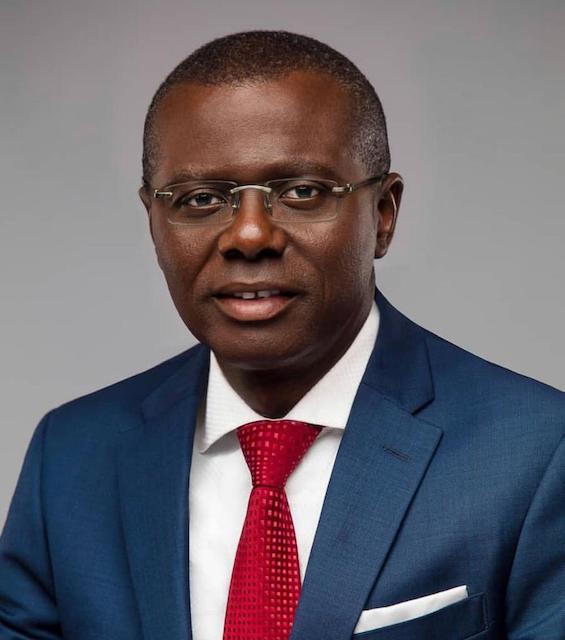
Lagos State Governor, Babajide Sanwo-Olu, has called on world leaders, development finance institutions and private-sector investors to strengthen partnerships with subnational governments in Africa to accelerate climate action and support sustainable development.
Sanwo-Olu also said Lagos and other regional governments around the world were prepared to take the lead in translating climate ambitions into practical opportunities that protect communities, strengthen economies and improve livelihoods.
The governor made the call while addressing the United Nations High-Level Meeting on Climate Action and the Just Transition at the UN Headquarters in New York, where he shared the stage with California Governor Gavin Newsom.
The meeting, held as part of the 81st Session of the United Nations General Assembly, brought together world leaders and representatives of international organisations, financial institutions, businesses, subnational governments and civil society to discuss energy transition, climate adaptation and financing.
In a statement issued on Thursday by his Special Adviser on Media and Publicity, Gboyega Akosile, Sanwo-Olu said the partnership between Lagos and California demonstrated the importance of collaboration in tackling climate change.
The meeting, held on September 23 as part of the 2026 UN High-Level Week, came less than a week after Sanwo-Olu visited Sacramento to mark the California Legislature’s Sister State Resolution with Lagos.
“I am particularly proud to stand here alongside Governor Newsom of California. We need strong partnerships and collaborators. No one can do it alone,” Sanwo-Olu said.
Responding to questions on Lagos’ approach to flooding, rising sea levels and extreme urban heat, the governor said climate action must be integrated into the state’s wider development agenda.
“For Lagos, climate action is about turning ambition into opportunity: protecting our people, strengthening our economy and building a more resilient and prosperous state for generations to come.
“Climate action is not separate from development. It is central to how we build our future,” he said.
Sanwo-Olu highlighted interventions in transportation and waste management as key elements of Lagos’ climate response, noting efforts to promote cleaner and more efficient transportation for the more than 5.2 million vehicles operating on roads across the state.
He also pointed to the economic opportunities presented by the management of more than 5,000 tonnes of solid waste processed daily in Lagos through recycling, circular-economy initiatives and clean-energy approaches.
“These are not abstract climate policies. They are decisions that can create jobs, improve services, strengthen resilience and make everyday life better for millions of people,” the governor said.
According to Sanwo-Olu, states and regions have a strategic role in implementing global climate commitments because subnational governments possess significant powers to translate international agreements into tangible projects and services.
He said states and regions had the capacity to deliver up to 80 per cent of climate implementation worldwide, making subnational governments important actors in the global response to climate change.
The governor, however, stressed the need for affordable and long-term financing to enable states and regions to implement climate projects at scale.
Sanwo-Olu, who was accompanied by members of the Lagos State Executive Council, urged development finance institutions, investors and private-sector organisations to recognise the opportunities presented by climate investment in emerging markets.
“Our message from Lagos is simple: States, Regions and subnational governments are ready to deliver. We have the ambition. We have the responsibility. And increasingly, we have the solutions.
“Now we need to build the partnerships and mobilise the investment that will allow us to deliver them at scale,” he said.
Zebra News reports that Sanwo-Olu’s participation formed part of his engagements at the United Nations General Assembly and Climate Week NYC, which also included the Global Renewables Summit Leaders’ Dialogue, the Gates Foundation Goalkeepers event and the UN Global Compact Africa-Caribbean session.
The UN official programme listed the September 23 meeting on Climate Action and the Just Transition among the high-level events of the 81st General Assembly session, which runs from September 2026 to September 2027.
