


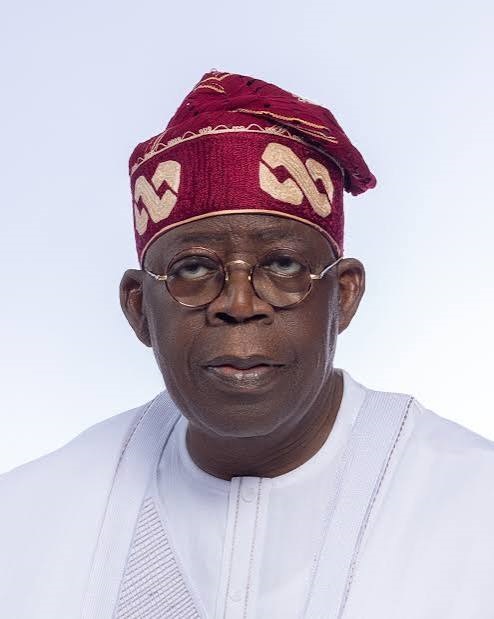
President Bola Tinubu has acknowledged that millions of Nigerian families still struggle to afford food, school fees and medical bills, but said their difficulties did not begin with the reforms introduced by his administration.
Tinubu said the challenges confronting many households were the accumulated consequences of decades of low productivity, inadequate infrastructure, limited opportunities and institutions that had failed to adequately serve vulnerable citizens.
The President made the remarks while outlining his administration’s plans to move Nigeria from an era of economic reform into what he described as an “age of prosperity”.
“I am also conscious that millions of our fellow citizens cannot wait for tomorrow. Some Nigerian families still struggle today for the next meal, the next school fee, the next medical bill, or simply enough money to get to work,” Tinubu said.
“Their circumstances did not begin with the reforms of the last three years. Their struggle is the accumulated consequence of decades of low productivity, inadequate infrastructure, insufficient opportunity and institutions that too often failed those who needed them most.”
He said the scale of the challenges meant they could not be resolved within a single four-year administration but argued that the government could change the direction of the country.
“We cannot erase in four years what accumulated over generations. But we can change its course. We can build an economy that steadily lifts people out of poverty while ensuring that those who remain vulnerable are not abandoned along the way,” he said.
Tinubu said his administration was therefore strengthening direct support for the poorest households and improving the National Social Register to ensure that government assistance reaches people who genuinely need it.
He also highlighted the Nigerian Education Loan Fund, saying the initiative was intended to ensure that students from low-income families were not denied access to higher education because of their inability to pay fees.
The President also pointed to the Consumer Credit Corporation (CREDICORP), saying it was providing working Nigerians with access to consumer credit to acquire essential assets such as vehicles, solar systems and digital devices without having to save for years before making such purchases.
Zebra News reports that Tinubu also said the Federal Government would continue working with state and local governments to strengthen primary healthcare, basic education and other essential public services relied upon by poorer Nigerians.
“Since 2023, we have paid salaries and pensions on time and in full. We have reformed the national pension programme to benefit retirees and the vulnerable,” he said.
Tinubu stressed that the social intervention programmes were not intended to replace economic prosperity but to support vulnerable Nigerians while they worked towards better livelihoods.
“These programmes are not substitutes for prosperity. They are a bridge to aid our nation’s citizens on their path towards it. Our objective is not to manage poverty more efficiently.
“We will defeat it,” he said.
The President acknowledged that achieving that goal would require time, discipline and sustained economic growth, as well as the creation of millions of productive opportunities across the country.
“It will take time. It will require discipline. It will require sustained growth year after year and the creation of millions of productive opportunities across our country,” he said.
Tinubu argued that Nigeria was now better positioned to pursue long-term prosperity following what he described as difficult economic decisions and reforms.
“But for the first time in decades, we embark on this task from a position of strength; with an economy whose fundamental direction has been corrected,” he said.
“We confronted the difficult choices we faced and have laid the foundations for lasting prosperity. Rather than fail the promise of a better future for our children, the time has come for us to build that future.”
He declared that the country had moved beyond the reform phase and was entering what he described as an “age of prosperity”.
“The age of reform has done its work. Now begins the age of prosperity. An age in which the promise of this great nation must finally become the lived experience of Nigerians from all walks of life,” Tinubu said.
“We have travelled through difficult years together. We have made hard decisions together. And now, still together, we must build the country those decisions have made possible.
“I believe deeply in what lies ahead.”
