


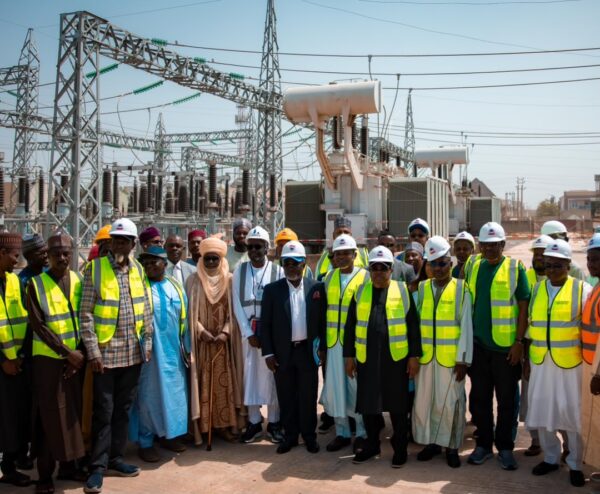
The Federal Ministry of Power, through the Transmission Company of Nigeria (TCN), has commissioned four transmission substations in partnership with the Kano State Government, adding 544MW of wheeling capacity to Kano State and the national electricity grid.
The substations are located in Walalambe, Kumbotso, Dakata and Dan-Agundi. According to the project details, the facilities are expected to improve electricity supply to industrial, commercial and residential areas while easing pressure on overloaded infrastructure.
Walalambe has received a new substation with two 40MVA transformers, providing 80MW of capacity. Kumbotso has been equipped with additional transmission infrastructure at the 330kV level, including 100MVA transformers, while Dakata and Dan-Agundi have each gained an additional 100MVA transformer at the 132kV level.
The projects are designed to strengthen bulk electricity supply, reduce congestion at existing substations and accommodate previously unmet electricity demand across Kano.
At Walalambe, six outgoing feeders will support electricity distribution to Tokarawa Industrial Area, the Eastern Bypass, Maiduguri Road, Hadejia Road and neighbouring communities.
The commissioning has also facilitated the reconnection of Lee Group, a major industrial enterprise, to the national grid after more than 30 years of operating independently of public electricity supply.
Meanwhile, the fire-damaged Dan-Agundi substation has regained substantial capacity, improving its ability to serve Kano’s ancient town, the Emir’s Palace and surrounding communities.
Zebra News reports that the investments are expected to support manufacturing, strengthen small businesses, create employment opportunities and improve electricity access for households.
The Federal Government described the projects as part of President Bola Tinubu’s Renewed Hope Agenda, which prioritises power sector reform and infrastructure development as drivers of economic growth.
The additional transmission capacity is expected to provide a stronger foundation for industrial expansion and economic activities across Kano State, although the actual benefits to consumers will depend on reliable generation, transmission and distribution.
