


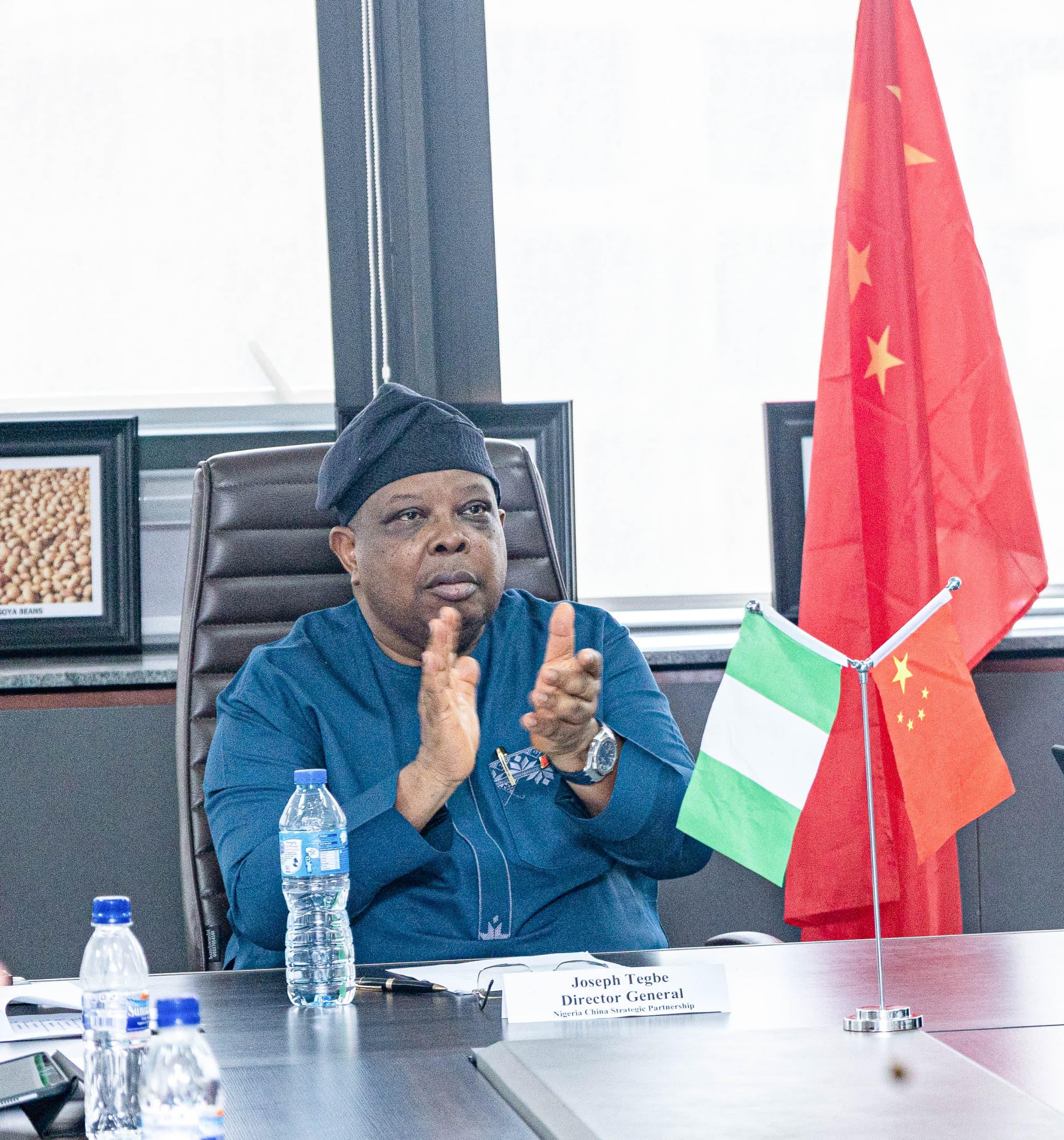
The Federal Government has approved a $2 billion investment in a new East–West Super Grid aimed at strengthening Nigeria’s electricity transmission network and increasing its capacity to meet growing power demand.
The Minister of Power, Joseph Tegbe, disclosed this during a television interview on TVC, describing the project as a major intervention to address longstanding transmission challenges and improve electricity supply across the country.
According to the minister, the proposed Super Grid will pass through Funtua, Gwagwalada, Ikot-Ekpene, Benin, Epe and Ilorin, with the capacity to transmit at least 19,000 megawatts of electricity.
He said the project is expected to be completed within 18 to 24 months, adding that procurement processes had commenced following presidential approval.
Tegbe clarified that the new infrastructure would complement the existing national grid rather than replace it, providing additional transmission capacity and improving the movement of electricity across different regions.
He also disclosed that the government had commenced a technical audit of the power sector to identify faulty equipment and infrastructure requiring rehabilitation or replacement.
The assessment identified problems involving transmission towers, insulators, conductors and relays across several transmission corridors.
On the financial challenges facing electricity generation companies, the minister said the Federal Government had paid ₦1.23 trillion out of approximately ₦3.3 trillion owed to generation companies, leaving an outstanding balance of about ₦2 trillion.
He said the administration was targeting the settlement of the remaining debt in 2027 to improve the financial position of generation companies and enable them to meet their obligations to gas suppliers.
Tegbe also highlighted the need to improve electricity generation from underutilised power plants in the Niger Delta, which have a combined installed capacity exceeding 3,000 megawatts but currently contribute approximately 400 megawatts.
According to information obtained by Zebra News, the government is also prioritising the restoration of the Oshogbo–Ikeja West transmission line, which could deliver an additional 400 megawatts to the Lagos electricity complex.
The minister identified the Electricity Act 2023 as another major component of the government’s reform agenda, noting that it allows states and private investors to participate more actively in electricity generation, transmission and distribution.
He said the Federal Government expects private sector participation in transmission infrastructure to expand within the next two to three years.
Tegbe reaffirmed the administration’s commitment to addressing challenges across the electricity value chain through infrastructure investment, improved financing and greater private sector participation.
