


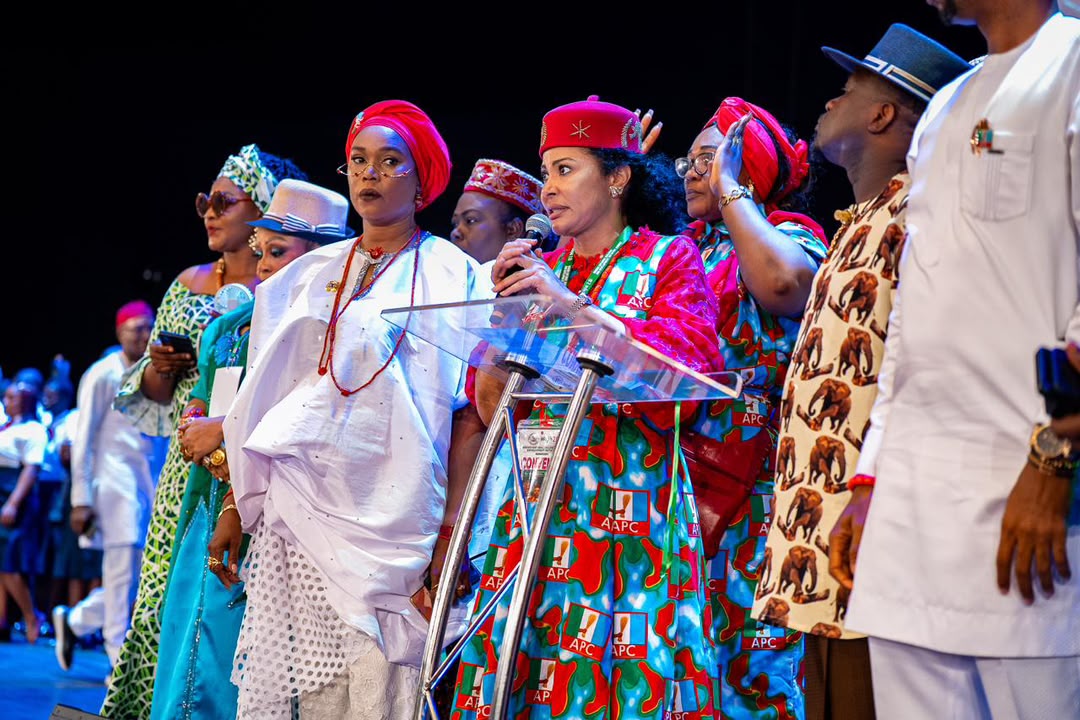
The Honourable Minister of State for Budget and Economic Planning, Dr Doris Nkiruka Uzoka-Anite, has taken a significant step towards strengthening relations between the Federal Government, the Lagos State Government and the Igbo community with the successful convening of the Ndigbo Lagos State Town Hall Dialogue.
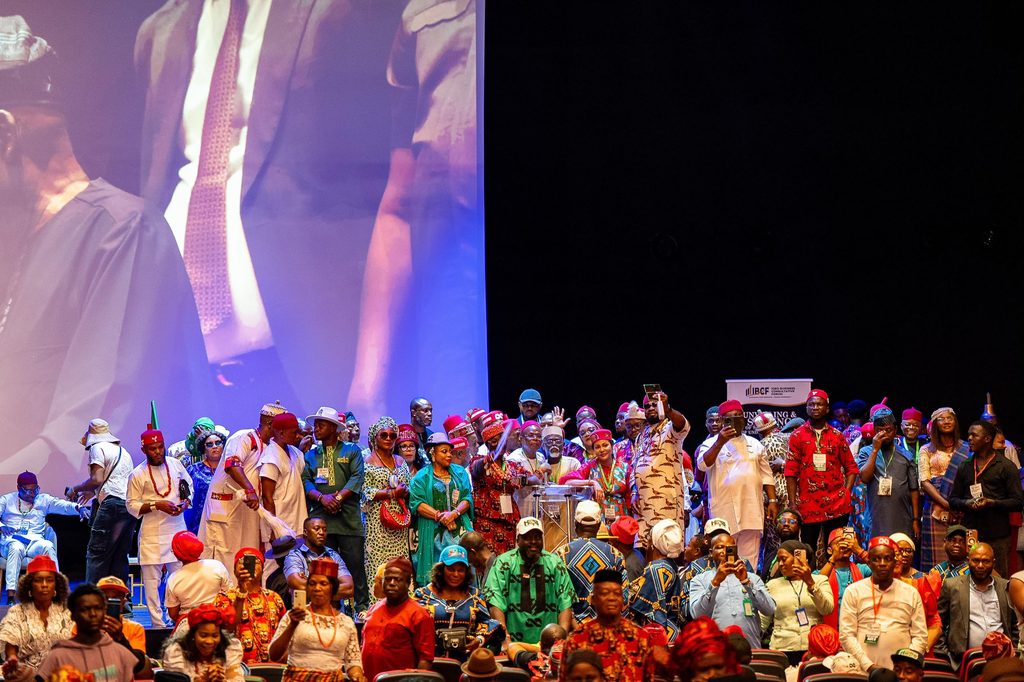
The high-profile gathering, held on Monday at the Wole Soyinka Centre for Culture and the Creative Arts, formerly known as the National Theatre, Iganmu, Lagos, brought together President Bola Ahmed Tinubu, GCFR, Governor Babajide Sanwo-Olu, senior government officials, prominent Igbo leaders, business executives, traditional rulers and community representatives.
Convened by Dr Uzoka-Anite under the auspices of the Ndigbo National Dialogue and Development Initiative (NNDDI), the event provided a strategic platform for strengthening political understanding, promoting economic cooperation and addressing issues affecting the welfare, investments and participation of Ndigbo in national development.
The gathering attracted an enthusiastic audience, with the main bowl of the venue filled with representatives of Igbo communities, market associations, women and youth organisations, captains of industry and other stakeholders, reflecting the significant presence and influence of the Igbo community in Lagos.
Speaking at the event, President Tinubu reaffirmed his administration’s commitment to building an inclusive Nigeria in which every ethnic group has a sense of belonging and an opportunity to contribute to national progress.
The President acknowledged the immense contributions of Ndigbo to commerce, entrepreneurship, employment generation and economic development, stressing that neither Lagos nor Nigeria could realise its full potential without their active participation.
“I am here to listen to you. I am here to work with you. Igbos are my brothers and sisters,” the President declared, assuring the gathering that his administration remained committed to the interests and aspirations of all Nigerians, irrespective of ethnic background.
His remarks were warmly received by participants, with visible expressions of solidarity with his administration and support for his re-election bid in 2027.
In her address, the convener, Dr Uzoka-Anite, described the dialogue as an important opportunity to consolidate the relationship between Ndigbo and the Federal Government while building stronger bridges of trust, cooperation and mutual respect with the Lagos State Government.
She stressed that the Igbo community’s longstanding contributions to enterprise, commerce and national development deserved meaningful recognition, greater opportunities and a stronger voice in decisions affecting their economic and social interests.
The Minister also reaffirmed the support of Igbo stakeholders for President Tinubu and his Renewed Hope Agenda, noting that sustained political engagement must translate into practical outcomes that improve the lives of the people and protect their investments.
Dr Uzoka-Anite, whose engagements with Igbo stakeholders have been instrumental in advancing the initiative, emphasised the need to move beyond periodic consultations towards sustainable institutional arrangements that would address the concerns of the community.
According to her, the objective is to establish effective mechanisms for protecting businesses and property, resolving disputes, promoting investment opportunities and ensuring that the interests of Ndigbo receive appropriate attention at the highest levels of government.
Governor Babajide Sanwo-Olu, who also addressed the gathering, reaffirmed Lagos State’s commitment to peaceful coexistence and harmonious relations with its Igbo residents.
He acknowledged the community’s enormous contributions to the commercial and economic growth of Lagos, emphasising the importance of sustained cooperation between the state government and the Igbo population.
A major highlight of the dialogue was the unveiling and promotion of the Igbo Business Consultative Forum (IBCF), an initiative spearheaded by Dr Uzoka-Anite to establish a permanent and structured channel of communication between Igbo business interests and government.
The Forum represents a major component of the Minister’s efforts to translate dialogue and goodwill into practical institutional engagement, particularly in addressing challenges confronting Igbo-owned businesses and investments in Lagos.
The initiative follows a series of engagements dating back to October 2025, when Dr Uzoka-Anite facilitated a meeting between Governor Sanwo-Olu and prominent Igbo business and community leaders.
Subsequent consultations culminated in a stakeholders’ meeting on 17 November 2026, where representatives of major Igbo markets, trade associations, businesses and community organisations endorsed Chief (Dr) Chidi Anyaegbu, founder and Chairman of Chisco Group, as the pioneer Chairman of the Forum.
With the backing of President Tinubu and Governor Sanwo-Olu, the IBCF is expected to provide a credible and unified platform for addressing longstanding concerns relating to business and property rights, market redevelopment, taxation, security, investment protection and relations with host communities.
A proposed Memorandum of Understanding between the Forum and the Lagos State Government is also expected to provide a framework for regular consultations, mediation, peaceful coexistence and inclusive economic development.
Speaking during the consultations leading up to the dialogue, Dr Uzoka-Anite had described the Forum as an important mechanism for giving Igbo businesses a coordinated voice that would be recognised and respected at the highest levels of government.
Although initially established with a focus on Lagos, the initiative is envisaged as a national platform, with structures across the 36 states of the federation and the Federal Capital Territory, enabling Igbo entrepreneurs, professionals and trade associations to engage constructively with government wherever they operate.
The event also provided an opportunity to highlight key initiatives of the Tinubu administration in the South-East, including the establishment of the South-East Development Commission, ongoing federal road infrastructure projects and programmes designed to expand investment and economic opportunities across the region.
Among the prominent dignitaries at the dialogue were the Deputy Governor of Lagos State, Dr Obafemi Hamzat; Chief of Staff to the President, Rt Hon Femi Gbajabiamila, SAN; Minister of Works, Senator David Umahi; and former Minister of State for Labour and Employment, Rt Hon Nkeiruka Onyejeocha.
Also in attendance were members of the Lagos State Executive Council, prominent Igbo business leaders, traditional rulers, market leaders, community representatives and other distinguished stakeholders.
The dialogue underscored the importance of inclusive governance, political cooperation and structured engagement in building a stronger and more prosperous Nigeria.
For Dr Uzoka-Anite, the initiative represents more than a political gathering. It is a deliberate effort to create enduring institutional relationships that recognise the contributions of Ndigbo, protect their economic interests and strengthen their participation in national development.
With President Tinubu’s personal attendance, Governor Sanwo-Olu’s reaffirmation of Lagos State’s commitment and the broad participation of Igbo stakeholders, the dialogue marked an important milestone in the pursuit of peaceful coexistence and economic partnership.
As observed by Zebra News, the significance of the gathering lies not only in the political assurances given by the country’s leadership but also in the practical framework being championed by Dr Uzoka-Anite to ensure that dialogue produces measurable and lasting benefits.
Through the Ndigbo National Dialogue and Development Initiative and the proposed Igbo Business Consultative Forum, the Minister has placed structured engagement, investment protection and inclusive economic participation at the centre of efforts to strengthen relations between Ndigbo and government.
The Lagos dialogue has therefore opened a new chapter in the pursuit of stronger partnerships, mutual understanding and a more inclusive national development agenda.
