


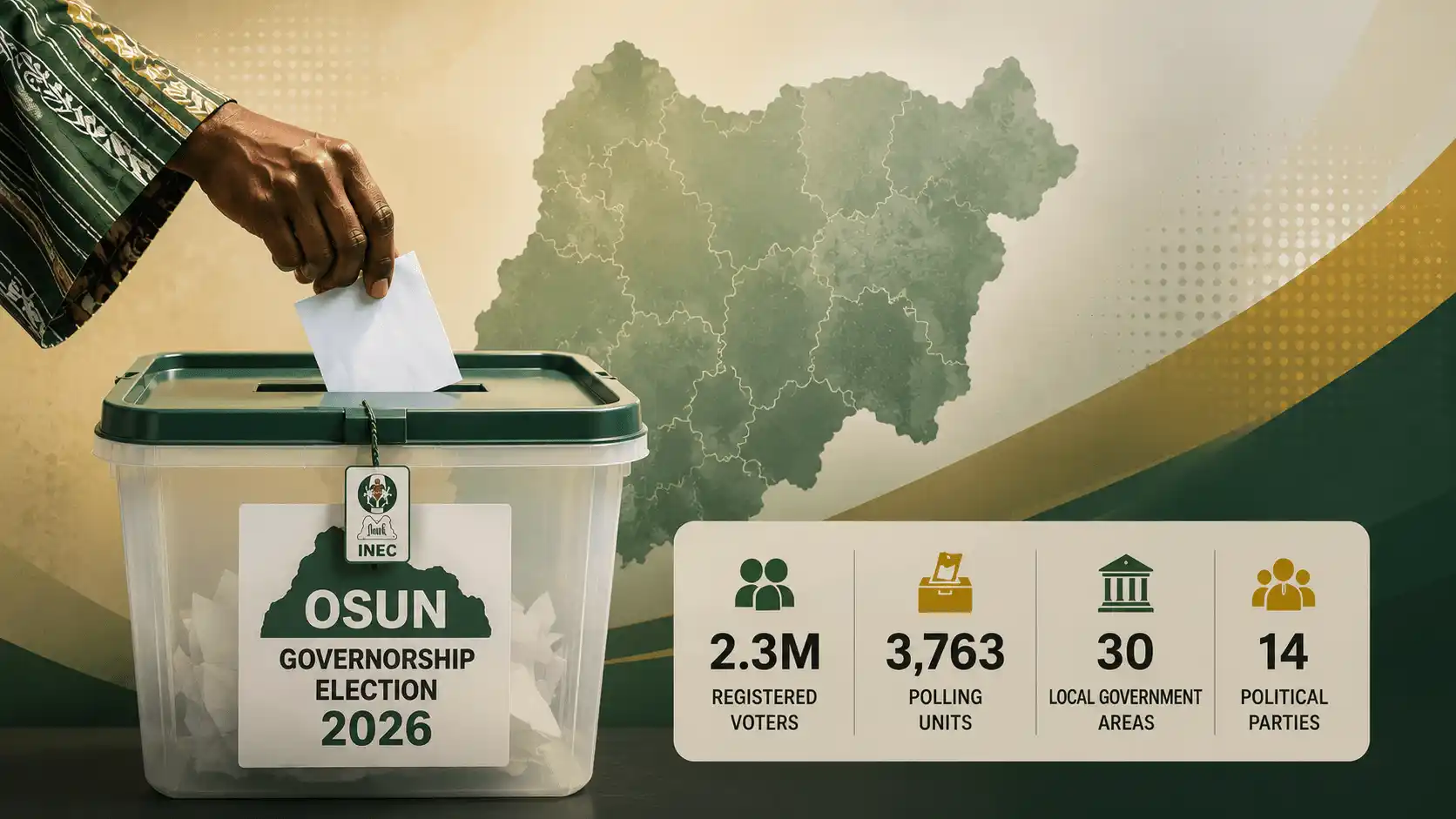
The political atmosphere across Osogbo, Ile-Ife, Ilesa, Ede and other parts of Osun State has become tense as voters head to the polls today to elect a governor for the next four years.
Fifteen political parties are participating in the election, with incumbent Governor Ademola Adeleke of the Accord Party facing major challenges from Otunba Bola Oyebamiji of the All Progressives Congress (APC) and Rt. Hon. Najeem Salaam of the African Democratic Congress (ADC).
Adeleke is seeking a second term after winning the 2022 governorship election on the platform of the Peoples Democratic Party (PDP). He later defected to the Accord Party ahead of the 2026 election.
His move has altered the political calculations in the state, with the possibility that votes from his supporters could be divided among the major parties.
Adeleke is campaigning on his first-term record and name recognition. His campaign has also called for a peaceful election as voters prepare to cast their ballots.
Oyebamiji is relying on the APC’s extensive political structure and support from the Federal Government. The party controls significant political structures across the state and hopes to benefit from the absence of the PDP from the ballot.
Zebra News reports that the APC is expected to focus heavily on areas including Ife, Osogbo and the Ijesa axis as it seeks to defeat the incumbent.
The ADC candidate, Najeem Salaam, is seeking to position himself as an alternative to the two leading contenders. Salaam served as Speaker of the Osun State House of Assembly from 2011 to 2015.
His choice of Mrs Yemisi Agiri as running mate could also strengthen his appeal among female voters as the ADC seeks to expand its support across the state.
Beyond party politics, voters have identified employment, education, healthcare and security as major issues influencing their decisions.
Youth organisations and market associations have held town hall meetings, while civil society organisations have continued voter education campaigns and encouraged eligible voters to collect their Permanent Voter Cards.
Security agencies have also intensified preparations for the election.
The Inspector-General of Police, Olatunji Disu, has met with Governor Adeleke and political party leaders ahead of the poll, warning against actions capable of disrupting the electoral process.
The police, Nigeria Security and Civil Defence Corps, Department of State Services and the Osun State Security Network Agency, also known as Amotekun, are expected to deploy personnel across the state’s 30 local government areas.
Zebra News reports that election observers are also expected to monitor the process, with organisations such as Yiaga Africa, Transition Monitoring Group and the Centre for Democracy and Development focusing on issues including vote-buying, voter accreditation and result transmission.
Observers are expected to monitor the use of the Bimodal Voter Accreditation System and the Independent National Electoral Commission’s Result Viewing Portal as part of efforts to promote transparency.
INEC’s election logistics will also face scrutiny, particularly the arrival of sensitive materials at polling units, the functionality of BVAS devices and the timely uploading of polling unit results.
The election is largely shaping up as a contest between Adeleke’s incumbency and the APC’s party machinery, while the ADC and other parties seek to establish themselves as alternatives.
Adeleke is asking voters to judge his administration based on its record over the past four years. The APC is presenting its organisational structure and capacity as reasons voters should support Oyebamiji.
For the ADC and other smaller parties, the election provides an opportunity to challenge the dominance of the two leading camps.
Osun has witnessed closely fought governorship elections in the past, often producing dramatic outcomes.
With 15 parties on the ballot, the main contest appears concentrated around Adeleke, Oyebamiji and Salaam. The election will ultimately test whether the incumbent’s record and personal support can withstand the organisational strength of the opposition.
