


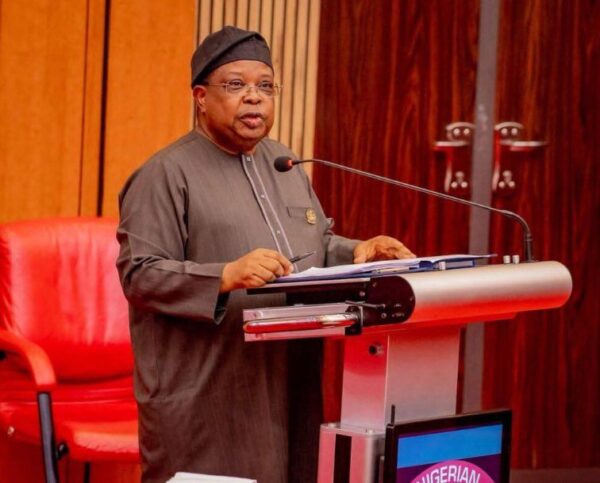
The Federal Government has dismissed reports of an imminent increase in electricity tariffs, assuring Nigerians that there are no immediate plans to raise the cost of power.
Minister of Power, Joseph Tegbe, gave the assurance during a media interactive session in Lagos on Friday, saying the Tinubu administration remains focused on improving electricity supply while ensuring transparency and fairness for consumers.
Tegbe said the government’s Presidential Metering Initiative is aimed at achieving universal metering so that electricity users are billed only for the power they consume.
“There is no plan for an immediate increase in electricity tariffs,” the minister said, adding that the administration is committed to delivering reliable electricity in line with President Bola Tinubu’s Renewed Hope Agenda.
He described the media briefing as the beginning of a new phase of openness, accountability and collaboration in the power sector, stressing that ongoing reforms are intended to build on the progress already made.
“Our objective is clear: to make electricity more available, make the grid more reliable, make the market financially sustainable and restore investor confidence,” Tegbe said.
“Ultimately, we want to ensure that electricity becomes a catalyst for national productivity rather than a constraint to economic growth.”
According to the minister, President Tinubu has demonstrated a strong commitment to reforming the electricity sector since the liberalisation of the industry, recognising that no country can achieve industrialisation without a reliable power supply.
He said the administration has prioritised investments in transmission infrastructure, expanded rural electrification, strengthened coordination across the electricity value chain and continued reforms aimed at attracting private investment while protecting the public interest.
Tegbe also announced the launch of the Power Force programme, an initiative that will recruit 5,000 Nigerian youths to install electricity meters across the country.
The programme, he said, is expected to reduce the nation’s metering gap while equipping participants with technical skills through the National Power Training Institute of Nigeria (NAPTIN).
The minister added that the ministry has made significant progress in addressing longstanding challenges surrounding meter procurement and improving electricity generation, noting that national grid output has consistently exceeded 5,000 megawatts over the past two weeks.
“Our ambition is clear: reliable electricity that powers our homes, competitive electricity that powers our industries, sustainable electricity that attracts investment, and inclusive electricity that reaches every Nigerian,” he said.
Tegbe also disclosed that the Federal Government plans to phase out electricity subsidy payments beginning in 2027 as part of broader efforts to build a financially sustainable power sector.
