


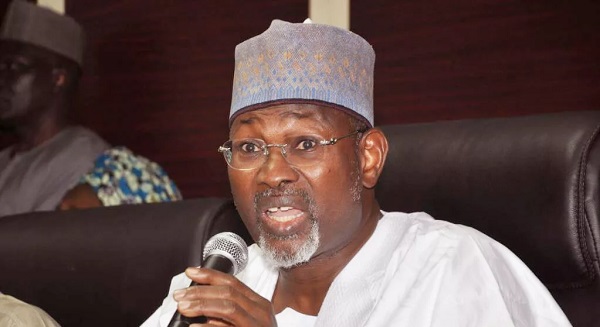
Former Chairman of the Independent National Electoral Commission, (INEC), Prof. Attahiru Jega, has outlined the persistent challenges that hinder democratic progress in West Africa.
He pointed to several key issues affecting electoral integrity, including political interference in the appointment and removal of electoral commissioners, as well as intimidation and targeting of electoral officials to secure desired outcomes.
Jega also highlighted the obstruction of legal reforms aimed at strengthening electoral management bodies (EMBs), such as measures to improve campaign finance oversight or promote more inclusive electoral processes.
Additionally, he noted the introduction of rules that facilitate fraud or manipulation, such as weak registration and voting procedures, or strategic changes to electoral laws that disproportionately benefit incumbents.
“The withholding of funds and resources from electoral operations, along with attempts to discredit the EMB, continue to undermine democratic development,” Jega stated.
Former President, Goodluck Jonathan, also called for sustained progress in democracy within the Economic Community of West African States to foster hope among citizens.
Jonathan commended West Africa’s democratic progress despite recent setbacks, referencing the coups in Mali, Burkina Faso, and Niger Republic.
He noted, “Although some nations have regressed to military rule, West Africa has largely transitioned from the dark days of pervasive military rule to a region where elections are the primary means of transferring power.
‘’Still, I believe we have made incremental progress. It is clear that West Africa has largely transitioned from the dark days of pervasive military rule and authoritarian regimes to a region where elections are now held routinely as the primary means of transferring political power.
‘’The fact that the military regimes are now treated as an aberration within the Economic Community of West African States speaks eloquently to this progression and highlights the resilience and determination of our people to embrace democracy as a way of life.
‘’This is, indeed, a clear departure from the not-so-distant past when many nations in the sub-region experienced long spells of political instability or military dictatorship with some of the leaders even playing an active role in the formation of ECOWAS in 1975.’’
He advocated robust youth participation in the electoral process, strong and independent electoral institutions and electoral reforms as well as efficient use of technology.
‘’There is no doubt that the future of democracy in Africa lies in addressing the root causes of instability, including poverty, inequality, and climate change.
‘’Political leaders and citizens alike must commit to promoting good governance and a culture of tolerance, inclusion, dialogue, and peaceful coexistence,’’ he further advised.
