


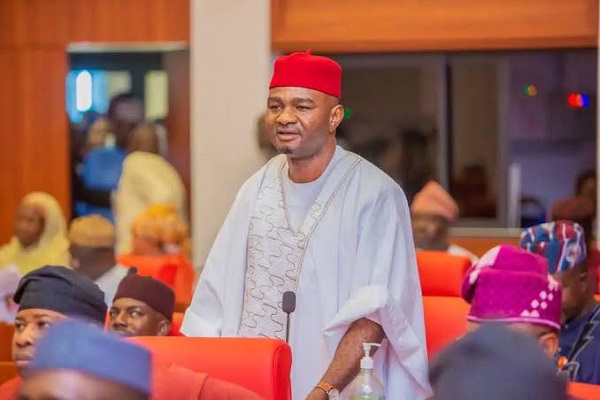
The Nigerian Senate recently witnessed a heated debate over aesthetics, development, and heritage when Senator Onyekachi Nwebonyi (Ebonyi North) proposed a controversial idea: relocate or renew the aging buildings surrounding Abuja’s Nnamdi Azikiwe International Airport. According to Nwebonyi, the current state of the area gives foreign visitors a poor first impression of Nigeria.
Speaking during Senate plenary, Nwebonyi urged the Federal Capital Territory Minister, Nyesom Wike, to prioritize the airport’s surrounding environment in the next budget cycle. “As you descend into the airport, what you see doesn’t represent Nigeria well,” said the Deputy Chief Whip. “The area needs renewal or the people should be relocated.”
The senator argued that the airport, a major gateway into the country, should reflect the progress and modernization underway in the Federal Capital Territory. His remarks were part of a broader push to align Nigeria’s infrastructure with its image as an emerging economic and diplomatic powerhouse.
But not everyone agreed.
Senate President Godswill Akpabio pushed back firmly on the relocation proposal, pointing out that the airport’s surrounding communities are people’s ancestral homes—not disposable real estate. “The image of the nation doesn’t start from what you see when descending,” Akpabio said. “In my state, you see rivers and creeks. Should we relocate that too so it doesn’t spoil anyone’s view?”
The Senate ultimately rejected Nwebonyi’s proposal via a voice vote, closing the door—for now—on any immediate plans to redevelop the area around the Abuja airport.
However, this wasn’t the only moment that put Senator Nwebonyi in the spotlight. Just days earlier, he made headlines for a fiery exchange with former Minister of Education Obiageli Ezekwesili during a committee hearing on an unrelated matter. When Ezekwesili interrupted him while he was speaking, Nwebonyi lashed out: “You can never be a senator. You are an insult to womanhood.”
The confrontation, now circulating widely on social media, has sparked its own wave of criticism and debate over decorum, gender sensitivity, and the tone of Nigeria’s political discourse.
Whether discussing national image or personal respect, one thing is clear: Senator Nwebonyi has made himself a central figure in some of Nigeria’s most charged conversations—and Nigerians are paying attention.
