


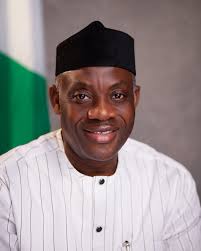
The Minister of Education, Dr. Tunji Alausa, says the Federal Government is committed to putting a permanent end to industrial actions in Nigeria’s tertiary education sector.
Speaking on Politics Today, a Channels Television programme on Tuesday, Alausa said President Bola Tinubu has given a clear directive that strikes by the Academic Staff Union of Universities (ASUU) and other trade unions in tertiary institutions must no longer be a recurring feature.
His remarks follow the recent decision by the ASUU branch at Yobe State University to suspend its strike action, which began on July 11.
“This is what the president has mandated us to do. The president has directed that never again in this country will ASUU, or tertiary institution trade unions, go on strike,” Alausa said.
Alausa criticized previous administrations for failing to honour agreements made with unions, despite holding cordial discussions.
“They would sit with the unions, agree on terms, and then ask, ‘Tell us when you’re going to implement this.’ But over the years, government would simply renege on those agreements,” he said.
“That is not what we are doing now. We are engaging them actively. All the presidents of the unions — most of them — can call me directly. They have my number, and I have theirs.”
He stressed that while not all demands have been met, the current administration is working “assiduously” to fulfill its obligations, maintaining open lines of communication with union leaders, including ASUU, NASU, SSANU, and COEASU.
Addressing concerns about delayed salary payments for lecturers, Alausa clarified that salaries are being paid regularly. He explained that delays stem from the transition from the Integrated Payroll and Personnel Information System (IPPIS) to the more flexible Government Integrated Financial Management Information System (GIFMIS).
“We’re paying salaries regularly. What happened is that after tertiary institutions moved off IPPIS — which was very restrictive — they are now on GIFMIS, allowing them more control over their funds,” he said.
He noted that under the current payment structure, workers on IPPIS are prioritized at the end of each month, while those on GIFMIS might receive payments by the 8th or 9th of the following month.
“That’s not ideal, and I’m not happy about it. But it’s being addressed,” he added.
Alausa reaffirmed the administration’s goal of restoring stability in Nigeria’s higher education system and rebuilding trust with academic unions through consistent dialogue and delivery on promises.
“We have not met all their requests yet, but we are working assiduously to fulfil them,” he said.
