


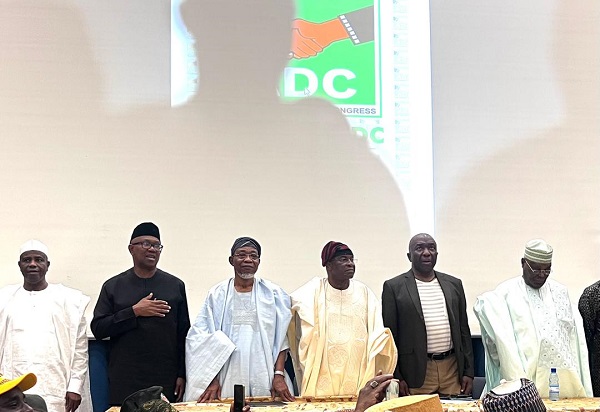
In a significant political development, Nigeria’s major opposition leaders have officially adopted the African Democratic Congress (ADC) as the platform to mount a united front against President Bola Tinubu in the 2027 general elections. This coalition signals a new chapter in Nigeria’s opposition politics, as prominent figures from various parties converge in a bid to reshape the country’s future.
Key Political Figures Join Forces
Former Vice President Atiku Abubakar, 2023 Labour Party presidential candidate Peter Obi, former Senate President David Mark, and other influential leaders have thrown their weight behind the ADC. Mark and former Osun State Governor Rauf Aregbesola were announced as the party’s interim National Chairman and Secretary, respectively, marking a new leadership era within the ADC.
In a stirring acceptance speech, David Mark acknowledged the challenges ahead but emphasized the coalition’s mission went beyond winning elections. “This is a concerted effort to rebuild the crumbling pillars of Nigeria’s democracy,” he declared, highlighting concerns about increasing authoritarian tendencies and erosion of democratic institutions under the current administration.
Criticism and Internal Dissent
However, the coalition’s formation has not been without controversy. Dumebi Kachikwu, the ADC’s 2023 presidential candidate, and other members of the party’s old guard criticized the move as a “hijack” by veteran politicians lacking the capacity to lead. Kachikwu branded the coalition leaders as “mostly geriatrics” and rejected their claims of rescuing Nigeria from crisis.
Similarly, a faction within the ADC questioned the legitimacy of Aregbesola’s appointment as interim secretary, calling it unconstitutional and lacking broad support. These internal disagreements highlight the complexities of building a unified opposition front in Nigeria’s vibrant but fractious political landscape.
Reactions From Established Parties
The ruling All Progressives Congress (APC) dismissed the coalition as a gathering of retired politicians who failed in their previous tenures, confidently asserting that the APC will “comfortably” win the 2027 elections. APC’s Director of Publicity, Bala Ibrahim, characterized the coalition as irrelevant to the current political climate and credited the ruling party with addressing Nigeria’s challenges.
Meanwhile, the Peoples Democratic Party (PDP), Nigeria’s largest opposition party, reiterated its unity under Acting National Chairman Umar Damagum, warning members against undermining the party through coalition efforts. Although some PDP leaders, including Atiku Abubakar and David Mark, support the ADC coalition, the party’s official stance remains against formal coalitions ahead of 2027.
Addressing Nigeria’s Challenges
Opposition leaders at the coalition unveiling voiced serious concerns about the current state of Nigeria under Tinubu’s administration, citing rampant corruption, worsening insecurity, economic hardship, and erosion of democratic checks and balances.
David Mark lamented the “gradual steering of the country toward a full-blown civilian dictatorship,” where legislative independence is compromised, and governance is overshadowed by politicking. The coalition aims to restore security, prosperity, and true democratic governance to Nigerians.
A Movement, Not Just a Party
Former transport minister Rotimi Amaechi, who recently resigned from the APC to join the opposition fold, described the coalition as a movement rather than a mere party switch. “Nigeria is destroyed… We must start a movement that brings Nigerians together to take over government,” he urged, underscoring the grassroots ambition of the coalition.
What Lies Ahead
The formation of the ADC-led coalition marks a pivotal moment in Nigerian politics as opposition forces attempt to present a united alternative to the ruling party. However, internal dissent within the ADC and contrasting positions among major opposition parties like the PDP reveal that unity will require ongoing negotiation and compromise.
With elections still two years away, the coming months will be critical in testing the coalition’s resolve, strategy, and ability to mobilize Nigerians dissatisfied with the current administration.
