


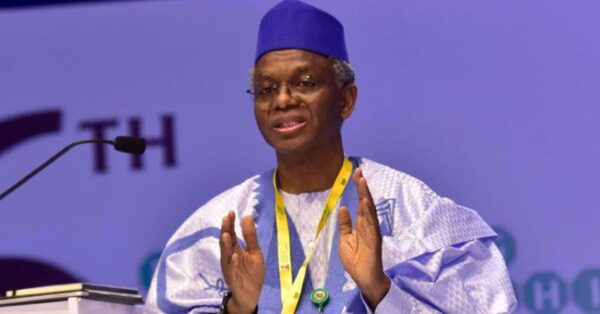
In a recent appearance on Channels Television’s Sunday Politics, former Kaduna State governor Nasir el-Rufai shared bold predictions about Nigeria’s 2027 presidential election — and they’re already stirring political conversations across the country.
According to el-Rufai, Nigeria may be heading toward an unprecedented electoral scenario: a presidential runoff. He suggested that no candidate is likely to secure the constitutionally required majority in the first round of voting, opening the door to a second-round face-off — a first in Nigeria’s democratic history.
“The worst-case scenario in the 2027 elections is that no winner will emerge in the first round,” El-Rufai said. “We may have to go for a runoff, and Bola Tinubu will not be on the ballot for the runoff, because he will, at best, be third in the election.”
This forecast is particularly striking given that El-Rufai was once one of President Bola Tinubu’s staunchest allies during the 2023 campaign. However, he now argues that electoral success in 2027 will not hinge on party affiliations or campaign money, but on tangible performance — especially that of Tinubu and sitting governors.
“I was one of Bola Tinubu’s biggest campaigners, but I couldn’t deliver the state [Kaduna] to him,” he admitted. “Bola Tinubu himself couldn’t win his state with his own governor in place.”
El-Rufai contends that the political landscape in Nigeria has shifted significantly. Despite the ruling All Progressives Congress (APC) holding federal power, he warns that the party may struggle to retain the presidency in 2027. His assessment? Voters are increasingly performance-driven and less swayed by political branding or incumbency.
Addressing the power dynamics at play, El-Rufai criticized the belief that control over institutions like the Independent National Electoral Commission (INEC), the police, or the military guarantees electoral success.
“You may think you have money, INEC, the police, the army… Well, President Tinubu, invite ex-President Goodluck Jonathan for a chat, and ask him if he didn’t have all that in 2015 — and yet we got him out,” he said. “This time? It’s worse.”
He also took a jab at the widely-held belief that Tinubu is an unbeatable political strategist, stating simply: “Wait.”
In a notable aside, El-Rufai disclosed that had he been appointed a minister under Tinubu’s administration, he would have resigned — an implicit critique of the current government’s direction. El-Rufai’s own ministerial nomination was blocked by the National Assembly in 2023, reportedly over security concerns, and he formally exited the APC more than a year later.
With just under two years to the next general election, El-Rufai’s comments have added a new layer of complexity to the evolving political narrative — and raised the stakes for all parties involved.
