


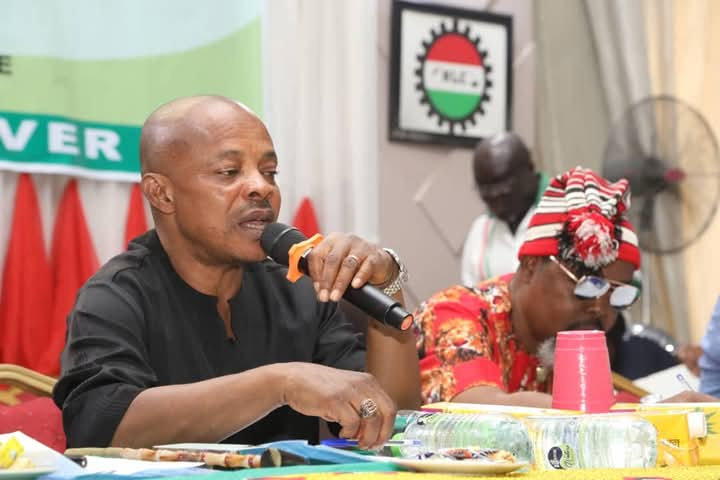
Nigeria’s position on the global stage regarding workers’ rights has once again drawn sharp criticism, with the Nigeria Labour Congress (NLC) expressing deep concern over the country’s inclusion in the list of the world’s worst violators of labour rights.
At the 68th Annual General Meeting of the Nigeria Employers’ Consultative Association (NECA), held in Lagos, NLC President Joe Ajaero—represented by his deputy, Adewale Adeyanju—described Nigeria’s latest ranking in the 2025 ITUC Global Rights Index as a “national embarrassment” and a “stain on our conscience.” The index places Nigeria among the bottom ten countries globally for workers’ rights protections.
“Many of these violations occur within enterprises represented here,” Ajaero stated bluntly, urging employers to lead the charge in changing the country’s trajectory.
Ajaero called on NECA members to model best practices in respecting labour laws and collective bargaining, emphasizing that employers and organized labour must work together—not as adversaries, but as partners committed to a shared vision of fair and productive workplaces.
“Declarations alone are not enough. We must work side by side to translate these commitments into living realities that protect workers from the excesses of unregulated technology while capturing its benefits,” he added, referencing resolutions from the recent 113th International Labour Conference in Geneva.
He highlighted the need for collaboration on pressing labour issues, especially around the platform economy and workplace safety, urging NECA to support the domestication of new International Labour Organisation (ILO) conventions such as:
- The Convention and Recommendation on Decent Work in the Platform Economy
- The Biohazards Convention to improve workplace health and safety.
To ensure ongoing cooperation, the NLC reiterated its call for the establishment of a Standing Committee between the NLC and NECA. This, Ajaero said, would serve as a permanent mechanism for dialogue, conflict prevention, and peaceful dispute resolution.
“This mechanism is no longer optional; it is the surest path to enduring industrial peace,” he stressed.
Ajaero also warned against recent attempts by some lawmakers and governors to remove labour issues from the Exclusive Legislative List, arguing that such a move could destabilize labour relations across the country.
“These misguided attempts reveal a dangerous ignorance of the chaos this would unleash. In moments like this, our unity is our shield,” he cautioned.
Beyond workplace issues, Ajaero raised concerns about the shrinking civic space, economic exclusion, and rising repression in the country. He emphasized that a vibrant civic environment is essential for both businesses and workers to thrive.
“Profit without people is an empty pursuit; progress without justice is a fleeting illusion,” he said. “That worker you consider redundant is also the consumer who keeps your enterprise alive.”
The NLC president commended NECA’s Director-General, Mr. Adewale-Smatt Oyerinde, for fostering open dialogue and mutual respect between employers and labour. He expressed hope that the discussions at NECA’s 68th AGM would lead to more fair, decent, and inclusive workplaces across Nigeria.
As Nigeria grapples with its poor labour rights record, the road to reform lies in collaboration, accountability, and mutual respect. The message from the NLC is clear: a just workplace is not just good for workers—it’s essential for the future of the economy itself.
