


After six turbulent months under emergency rule, Rivers State is preparing for the return of its elected governor, Siminalayi Fubara, on September 18. While the political drama that led to his suspension has gripped national headlines, the state’s journey through crisis, control, and now cautious calm offers a lot to unpack.
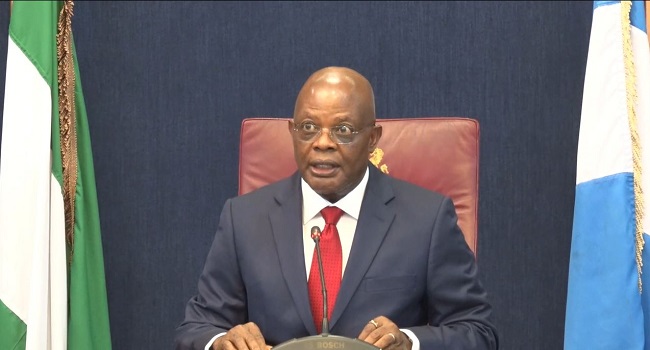
Vice Admiral Ibok Ete Ibas (retd), the sole administrator appointed by President Bola Tinubu, is set to hand over power. But before stepping down, Ibas defended his tenure at a thanksgiving service in Port Harcourt, declaring that he had fulfilled the president’s mandate by restoring peace and stability to the oil-rich state.
The roots of Rivers’ crisis trace back nearly two years, sparked by a fierce power tussle between former Governor Nyesom Wike and his successor, Fubara. Their political fallout stalled governance and created a leadership vacuum so intense that, on March 18, President Tinubu declared a state of emergency and suspended both the governor and the state’s House of Assembly.
The emergency rule was swiftly endorsed by both chambers of the National Assembly, though not without backlash. Eleven PDP governors challenged the move at the Supreme Court, calling it unconstitutional. As of now, the legal challenge—filed under SC/CV/329/2025—remains in limbo.
While Ibas credits his administration with restoring order and successfully conducting local government elections, the verdict from political stakeholders is far from unanimous.
Opposition parties have been vocal in their criticism:
- The PDP slammed the six-month emergency rule as an abuse of power and a violation of democratic principles.
- The NNPP called it a waste of time, questioning the legitimacy of the entire exercise.
- The Labour Party accused the move of serving the interests of Tinubu and Wike over the people of Rivers.
On the other hand, the APC praised Ibas for his efforts in stabilizing the political landscape and maintaining peace, especially during the August 30 local government elections, where the party won 20 of the 23 councils.
Ibas’s farewell message was filled with calls for reconciliation and unity. Speaking at the Ecumenical Centre in Port Harcourt, he urged political actors to put the state first and leave bitterness behind.
“The progress and prosperity of Rivers State must be placed above personal or partisan interest… No political victory or personal gain is worth the blood of our brothers and sisters,” he said.
It was a powerful speech—but one that came with notable absences. Neither Fubara nor Wike attended the event, and many traditional rulers stayed away. Only civil servants, local government officials, and security leaders were present.
Still, Ibas remains optimistic, claiming the seeds of reconciliation have been planted. Whether they’ll take root is another matter entirely.
In his sermon, Pastor Organ Barasin didn’t sugarcoat the impact of the crisis. He acknowledged that the emergency rule may have saved the state from a worse fate—but at a cost.
“If our attitudes don’t change, nothing will change in this state… Billions have gone,” he said bluntly.
His call to action? Forgive, forget, and move forward. It’s a sentiment echoed by many in the state, especially the youth, who’ve grown weary of political instability and are desperate for meaningful development.
With Governor Fubara set to return to office, the big question is: what now? Will the reconciliation between him and Wike hold? Will the foundations laid by Ibas translate into real governance, or are we bracing for another round of political chess?
One thing is clear: Rivers State can’t afford another season of instability. The people are watching, the nation is watching, and this time, there may be far less tolerance for power plays at the expense of progress.
