


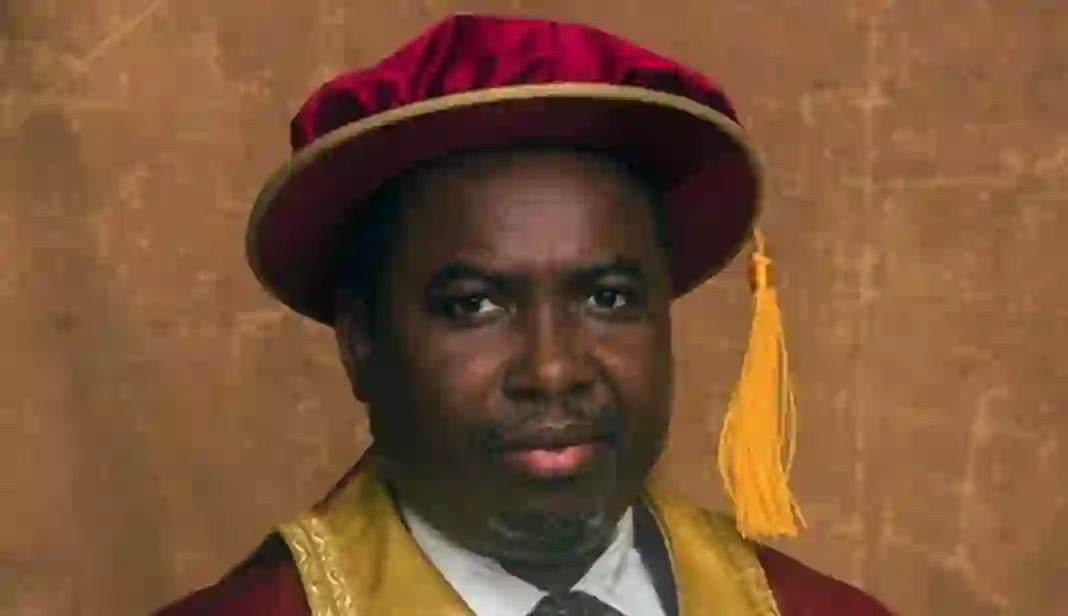
In a significant development for Nigeria’s electoral system, President Bola Tinubu has appointed Professor Joash Ojo Amupitan, SAN, as the new Chairman of the Independent National Electoral Commission (INEC). His appointment marks the end of the tenure of Professor Mahmood Yakubu, who had served for a decade. Amupitan’s elevation to the helm of the nation’s electoral body is a noteworthy milestone, not just for his career, but for the political landscape of the country. Abiola Alaba Peters highlighted some facts to note about the new INEC Chairman.
Early Life and Education
Professor Joash Ojo Amupitan was born in Kogi State, located in the North-Central region of Nigeria. He hails from a family that values education and professionalism, which undoubtedly played a significant role in shaping his career. Amupitan pursued his higher education in law, eventually attaining a law degree that would lay the foundation for his remarkable legal career.
Amupitan’s academic journey didn’t stop with his law degree. His commitment to excellence saw him earn a Master of Laws (LL.M) and eventually, a Doctor of Philosophy (PhD) in law. His expertise and scholarship in the legal field are well-respected, and he has contributed to the academic community in various capacities.
Legal Career and Achievements
Before his appointment to INEC, Professor Amupitan was a renowned legal practitioner and educator. He is a Senior Advocate of Nigeria (SAN), the country’s equivalent of a Queen’s Counsel (QC) in the United Kingdom, a title that is reserved for the most accomplished and distinguished lawyers in Nigeria. Achieving SAN status is a significant accomplishment and reflects the high regard in which Amupitan is held within the legal community.
Amupitan’s legal expertise spans several areas of law, including constitutional law, electoral law, and international law. He has earned a reputation for his sharp legal mind, integrity, and commitment to justice. His legal career also includes time spent as a lecturer and professor of law, during which he mentored many aspiring legal professionals.
Amupitan’s knowledge of electoral law is particularly relevant to his new role as INEC Chairman. Having taught courses on constitutional and electoral law, he has deep insight into the intricacies of Nigeria’s electoral system, which will be invaluable as he steers the country’s election processes in the coming years.
INEC Chairmanship Appointment
On Thursday, the National Council of State unanimously approved the appointment of Professor Amupitan as the new INEC Chairman, following a nomination by President Bola Tinubu. This approval came after the completion of Professor Mahmood Yakubu’s 10-year tenure at the helm of INEC.
Amupitan’s appointment is historic in several ways. He is the first person from Kogi State, and indeed the first from the North-Central region of Nigeria, to be appointed as the Chairman of the electoral body. This is seen as a significant step in ensuring national representation at the highest levels of electoral governance.
The timing of Amupitan’s appointment also speaks volumes about the priorities of President Tinubu’s administration. With the next set of general elections just a few years away, the role of INEC Chairman is crucial to ensuring free, fair, and credible elections. President Tinubu’s confidence in Amupitan suggests a belief that the legal scholar and practitioner will be able to bring much-needed reforms and leadership to the commission.
Taking over as the INEC Chairman, Amupitan is stepping into a role that comes with immense responsibilities and significant challenges. Nigeria’s electoral system has undergone considerable reforms in recent years, but there are still concerns about the integrity of elections, voter turnout, the transparency of processes, and the independence of the electoral body.
Amupitan will face the challenge of restoring public confidence in the country’s elections, following some controversial moments during recent electoral cycles. Addressing voter apathy, increasing the inclusivity of the electoral process, and ensuring that elections are free from manipulation and violence will likely be top priorities for him.
One of the key tasks that Amupitan will also need to tackle is the effective use of technology in Nigeria’s elections. While INEC has made strides in adopting electronic voting systems and other tech innovations in recent years, there is still much to be done in ensuring that technology is used to enhance transparency and efficiency without leaving room for fraud or malfunctions that could disrupt elections.
Furthermore, Amupitan will need to manage the diverse interests of Nigeria’s political landscape, which can sometimes be polarized. Ensuring that INEC operates with neutrality, fairness, and without political interference will be essential in maintaining the credibility of elections under his watch.
Significance of His Appointment
Amupitan’s appointment is seen as a step in the right direction for Nigeria’s electoral process. His legal background, expertise in electoral law, and experience as a Senior Advocate of Nigeria suggest that he will bring a wealth of knowledge and a sense of integrity to his role as INEC Chairman. His deep understanding of the legal framework that underpins the electoral system makes him well-positioned to handle the complex challenges that will arise during his tenure.
Moreover, Amupitan’s appointment holds significance for regional representation. As the first person from Kogi State to assume the position of INEC Chairman, his appointment reflects the growing recognition of the need for equitable representation in the governance of the country. This is an important step in promoting national unity and inclusivity within Nigeria’s political system
Professor Joash Ojo Amupitan’s appointment as the new Chairman of the Independent National Electoral Commission marks the beginning of a new chapter in Nigeria’s electoral history. With his wealth of experience in law and his deep understanding of electoral processes, he is poised to make significant contributions toward the continued improvement of Nigeria’s electoral system. The challenges ahead are substantial, but with Amupitan at the helm, there is hope that Nigeria’s elections will be conducted with greater transparency, fairness, and credibility in the years to come.
