


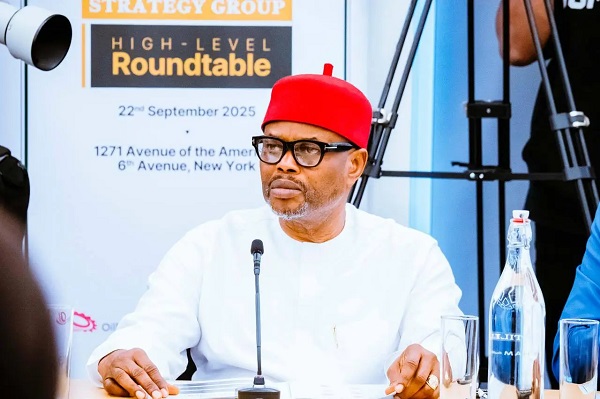
More details have emerged surrounding the sudden resignation of Uche Nnaji, the former Minister of Innovation, Science and Technology — and the picture is more damning than previously thought.
According to investigative findings published by Saturday PUNCH, Nnaji’s resignation was not voluntary but a direct result of pressure from the Presidency, following allegations of certificate forgery that have rocked the Tinubu administration.
Nnaji, who was appointed as a minister in 2023, claimed to have earned a BSc from the University of Nigeria, Nsukka (UNN) in 1985 and also presented a National Youth Service Corps (NYSC) certificate. However, an investigation by Premium Times unearthed troubling inconsistencies.
In response to a Freedom of Information (FOI) request by the media outlet, UNN stated in a letter dated October 2, 2025, that Nnaji did not complete his studies and therefore, the university did not issue him a certificate.
This contradicts documents Nnaji had submitted during his ministerial screening and prior engagements, calling into question the authenticity of his credentials.
In a bid to stop the unfolding scandal, Nnaji filed a court case (FHC/ABJ/CS/1909/2025) at the Federal High Court in Abuja, seeking to prevent UNN from releasing or altering his academic records.
However, Justice Hausa Yilwa dismissed the motion on September 22, further fuelling public suspicion when court filings showed that Nnaji admitted he had never collected his degree certificate — despite previously presenting one.
Following the public uproar and legal revelations, President Bola Ahmed Tinubu reportedly invited Nnaji to the Presidential Villa, where he was asked to resign quietly to avoid further embarrassment to the administration.
A senior presidential aide revealed:
“The President didn’t have to threaten him with dismissal. He simply asked him to resign. At that point, Nnaji had become a political liability.”
Another source confirmed that ministers and close aides felt the scandal was undermining the credibility of the government’s Renewed Hope Agenda.
In his resignation statement, Nnaji described the accusations as part of an “orchestrated, politically motivated campaign of falsehood.” He maintained his innocence, claiming the decision to step down was to “protect his integrity” and prevent the scandal from distracting the work of his ministry.
“These unfounded allegations and media distortions have not only caused personal distress but have also begun to distract from the vital work of the ministry,” he stated.
Nnaji also insisted that his resignation was not an admission of guilt, but a move to respect due process and ongoing judicial proceedings.
The controversy has sparked questions about the thoroughness of the Department of State Services (DSS) vetting process. Some critics argue that the DSS failed to detect the alleged forgery before Nnaji’s appointment.
However, presidency insiders defended the security agency, pointing fingers at UNN for providing conflicting information.
“The DSS may have been misled. In December 2023, the UNN registrar, Celine Nnebedum, told People’s Gazette that Nnaji graduated. She only recanted that claim in May and October 2025,” one source revealed.
A DSS official who spoke on condition of anonymity insisted that the agency “played its role with due diligence.”
While Nnaji has stepped down, questions linger over whether legal consequences will follow or if the matter will be quietly buried. The incident also raises broader concerns about credential vetting, not just by the Presidency, but also by the Nigerian Senate, which screens ministerial nominees.
As the dust settles, the scandal serves as a cautionary tale about the long-term damage that lack of transparency and institutional due diligence can cause, especially within the highest levels of government.
