


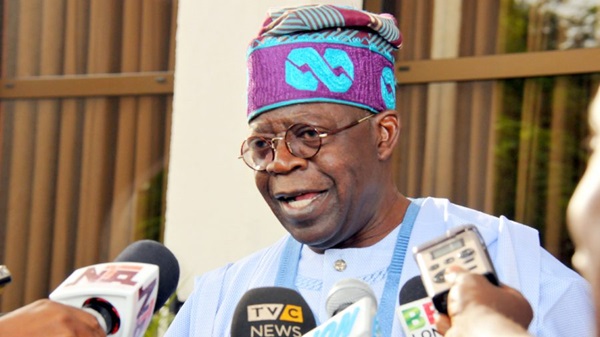
President Bola Tinubu has directed the Ministry of Finance to undertake a comprehensive review of all revenue deductions and retention practices by major revenue-generating agencies, as part of broader efforts to unlock funds for public investment and fast-track economic growth.
The directive was announced by Wale Edun, Minister of Finance and Coordinating Minister of the Economy, during a press briefing following Wednesday’s Federal Executive Council (FEC) meeting held at the State House in Abuja.
Agencies affected by the review include the Federal Inland Revenue Service (FIRS), Nigeria Customs Service (NCS), Nigerian Upstream Petroleum Regulatory Commission (NUPRC), Nigerian Maritime Administration and Safety Agency (NIMASA), and the Nigerian National Petroleum Company (NNPC) Limited.
“The president has called for an urgent reassessment of revenue deductions and retention models, especially regarding the cost-of-collection and other statutory withholdings,” Edun told reporters.
“This is to optimise public savings, improve spending efficiency, and free up more resources to finance economic growth.”
Under the current cost-of-collection structure, the FIRS retains 4% of non-oil revenues, NUPRC gets 4% of royalties and rents from the oil and gas sector, while Customs retains 7% of duties and levies collected. The NNPC deducts up to 60% of oil and gas profits under Petroleum Industry Act (PIA) provisions—split between a 30% management fee and a 30% frontier exploration fund.
Edun said Tinubu specifically questioned the NNPC’s deductions and instructed the economic management team to present actionable proposals to the FEC to reassess the framework.
Push for Higher Public Savings and Investment
President Tinubu, Edun noted, emphasised the critical need to increase public sector savings, which currently account for just 5% of Nigeria’s GDP, far below global benchmarks.
“Maximising every available naira is essential to sustain momentum in the face of tight global liquidity,” the minister said.
“Higher growth is not just an economic target—it’s a moral imperative for lifting Nigerians out of poverty.”
Tinubu reaffirmed his administration’s target of achieving a $1 trillion economy by 2030, which would require sustained 7% annual GDP growth starting in 2027. He also highlighted the role of the Renewed Hope Ward Development Programme, which aims to stimulate economic activity and poverty reduction across all 8,809 wards in the country, through public-private partnerships.
IMF Endorsement, Improving Economic Indicators
The president’s directive comes on the heels of the July 2025 IMF Article IV Report, which Edun said affirms Nigeria’s economic reform trajectory. The minister cited progress in stabilising the exchange rate, declining inflation, rising revenues, and maintaining a debt-to-GDP ratio within target levels.
“Nigeria is now seen as an attractive investment destination, supported by a market-reflective exchange rate and bold reforms that have restored policy credibility,” Edun said.
In 2024, the federal government mandated a 50% automatic remittance of gross revenue by self-funded government agencies. These agencies had previously retained up to 70% of revenue for expenses and operations—a model the Tinubu administration now seeks to overhaul in favour of greater fiscal transparency and investment.
