


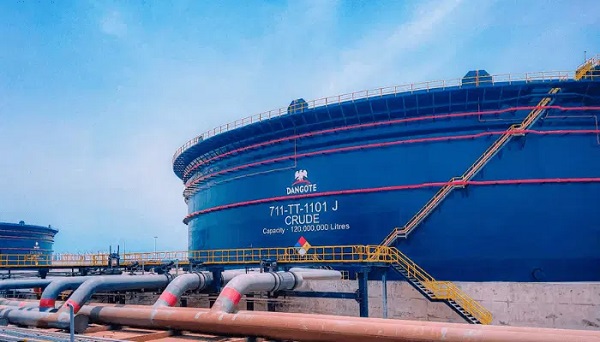
The Dangote Petroleum Refinery has increased its gantry price for Premium Motor Spirit (PMS) by N101, pushing the ex-depot rate from N774 to N875 per litre, a move likely to trigger fresh increases in pump prices nationwide.
A senior official at the refinery confirmed the adjustment on Monday, explaining that the decision was driven by recent instability in the global crude oil market.
“The price has been reviewed. The new gantry price is now N875 per litre, up from N774. The adjustment became necessary due to changes in global crude fundamentals and rising replacement costs,” the official said.
Industry checks show that the revised rate has already been reflected across pricing platforms, signalling a shift in downstream market benchmarks.
The increase comes just days after the refinery suspended petrol loading operations from midnight on 2 March 2026. The temporary halt followed a sharp spike in international crude prices, which climbed above $80 per barrel overnight.
According to industry data, PMS loading ceased at exactly midnight, effectively stopping product lifting and the issuance of Proforma Invoices — a clear indication that new transactions had been paused. The suspension, however, applied only to petrol. Automotive Gas Oil (AGO), commonly known as diesel, continued to load without interruption.
The refinery’s decision sent ripples through the downstream sector, prompting several private depot owners across the country to suspend petrol sales during the trading day.
One downstream operator said the move was a precautionary response to market uncertainty.
“Several depot owners suspended PMS sales because of the crude rally. The market is already pricing in risk premiums. No one wants to sell below replacement cost,” the operator explained.
The latest development comes against the backdrop of heightened volatility in the global oil market, fuelled by tensions between the United States and Iran. Concerns have mounted over potential supply disruptions, particularly around the strategic Strait of Hormuz, a critical route for global oil shipments.
Energy analysts warn that if crude prices continue their upward trend — particularly if they exceed $90 per barrel — Nigeria could see further increases in both petrol and diesel prices.
They caution that prolonged instability in the Middle East could disrupt global supply chains, inflate shipping and insurance costs, and ultimately raise both import and refining expenses, despite Nigeria’s expanding domestic refining capacity.
For motorists and businesses already grappling with elevated energy costs, the latest price adjustment signals the likelihood of renewed pressure at the pumps in the weeks ahead.
