


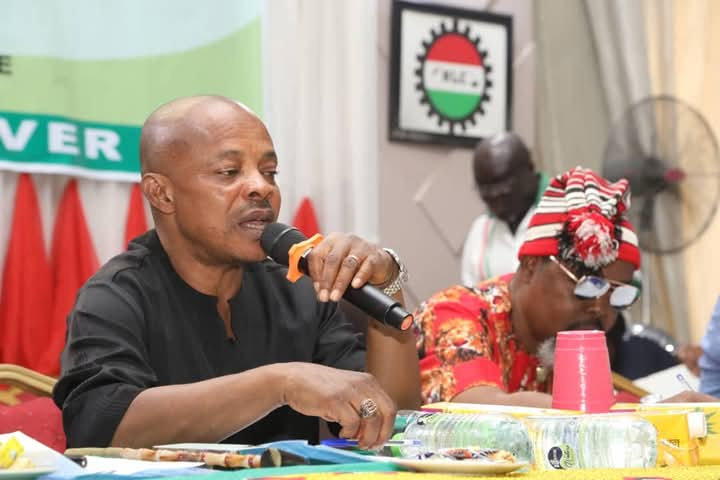
The Nigeria Labour Congress (NLC) has called for urgent government intervention over rising petrol prices, warning that workers across the country are struggling to cope with escalating fuel costs.
In a statement issued on Sunday and signed by its President, Joe Ajaero, the labour union said petrol prices have surged to between N1,170 and N1,300 per litre, worsening economic hardship for Nigerian workers.
“The Nigeria Labour Congress voices the collective anguish of millions of Nigerian workers bearing the brutal cost of a global crisis they did not create,” the statement said.
The NLC argued that the situation has exposed structural weaknesses in Nigeria’s downstream petroleum sector, questioning claims that local refining would protect the country from fluctuations in global oil prices. The union noted that the Dangote refinery has adjusted its pricing in line with international oil market movements, passing the increased costs on to consumers.
The labour body also renewed its call for the government to restore operations at Nigeria’s public refineries in Port Harcourt, Warri and Kaduna. According to the union, strengthening domestic refining capacity could help reduce the country’s exposure to global price shocks.
In addition, the NLC demanded measures to ease the economic burden on workers, including the introduction of a wage award, cost-of-living allowances, expanded social transfers and tax relief for low-income earners.
Citing projections by the Nigeria Economic Summit Group, the union said Nigeria could earn as much as N30 trillion in additional revenue from rising oil prices linked to the ongoing crisis in the Middle East.
The NLC urged the government to channel any potential windfall into programmes that would directly support citizens rather than allowing the funds to be lost through inefficiencies.
“The expected oil windfall must be used to cushion the negative effects of the crisis on Nigerians,” the statement added.
Meanwhile, the Managing Director of Afrinvest Securities Limited, Ayodeji Ebo, said Nigeria is currently benefiting from higher crude oil prices, but the same development is increasing the cost of petrol for consumers.
According to him, crude oil prices are trading between $95 and $105 per barrel, significantly higher than Nigeria’s budget benchmark of about $65 per barrel. While this could translate into stronger oil revenues and improved foreign exchange inflows for the government, he warned that it is also pushing up the landing cost of refined petroleum products.
“Petrol prices could move from around N700–N900 per litre to above N1,500, with industry projections, including those by the Petroleum Products Retail Outlets Owners Association of Nigeria, suggesting prices could even approach N2,000 per litre if the Middle East crisis persists,” Ebo said.
He added that diesel prices have also increased sharply, rising by more than 50 per cent to about N1,700–N1,800 per litre. The development, he noted, could significantly increase transportation, logistics and production costs across the economy.
“These increases will likely push inflation up by another three to five per cent, meaning that while government revenue rises, household purchasing power declines,” he explained.
Ebo suggested that the government could consider targeted measures such as tax relief, transportation support or limited subsidies delivered through a digital verification system to ensure that interventions reach the intended beneficiaries.
Another analyst, Ilias Aliyu, described the situation as a paradox for Nigeria, where higher oil prices boost government earnings while simultaneously increasing fuel costs for citizens.
“The more the price of oil goes up, the more Nigeria earns, but the more citizens pay at the pump,” he said.
Aliyu noted that while government intervention may be necessary to cushion the impact, any support measures should be carefully designed to avoid the misuse that characterised previous subsidy regimes.
He suggested that a direct subsidy tied to the fuel supply chain could help limit diversion.
“The best option may be for the government to apply a subsidy at source, possibly tied directly to the pump price. If money is given directly to individuals, it may be diverted, but applying it through each fuel load from refineries could reduce leakages,” he said.
Aliyu also pointed out that some oil-producing countries rely on strategic reserves or regulatory buffers to stabilise domestic fuel prices during global crises, a mechanism Nigeria may currently lack.
“In some countries, regulators have reserves that can be deployed to cushion the impact of rising prices for several months, but Nigeria may not have such a buffer,” he said.
Given the uncertainty surrounding the geopolitical crisis and its potential duration, Aliyu said temporary relief measures may be necessary.
“It would be ideal for the government to support citizens at this point, especially since it is unclear how long the current situation will last,” he added.
