


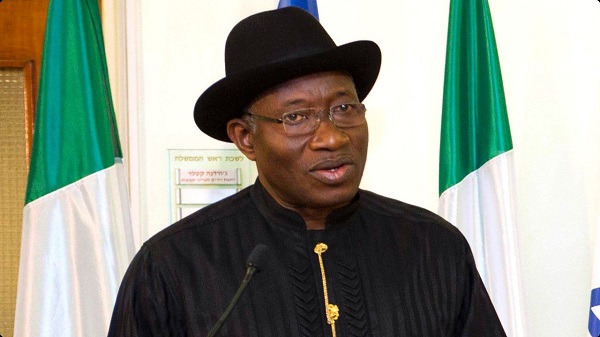
Former President Goodluck Jonathan has defended his time in office, stating that he did his best despite acknowledging that mistakes are inevitable in leadership.
His remarks follow criticism from former Vice-President Atiku Abubakar, who described Jonathan as inexperienced during a recent television interview. Atiku, now a presidential aspirant on the platform of the African Democratic Congress (ADC), argued that Jonathan’s leadership was affected by a lack of experience.
Speaking at the 2025 awards ceremony of the Association of Retired Career Ambassadors of Nigeria in Abuja, Jonathan responded that no leader is without fault. According to Zebra News, he questioned the notion that age or experience alone determines effective governance.
“If I made mistakes, yes nobody who becomes a governor or president will say they did not make mistakes,” he said. “I became president at 53 and left at 58, and they say I was too young. Must it have been 100 years before I ran the affairs of the state?”
Jonathan maintained that while errors are part of leadership, his administration achieved significant milestones, particularly in diplomacy. He pointed to Nigeria’s successful election to the United Nations Security Council during his tenure as evidence of effective governance.
Zebra News understands that Atiku, in his earlier remarks, also assessed the strengths of other opposition figures ahead of the 2027 elections, including Peter Obi, Rabiu Kwankwaso and Rotimi Amaechi, while expressing dissatisfaction with the administration of President Bola Tinubu.
Beyond domestic politics, Jonathan used the platform to highlight broader regional concerns, warning that political instability continues to hinder economic progress across West Africa. He stressed the importance of strengthening democratic systems within the Economic Community of West African States (ECOWAS), noting that economic integration cannot succeed without stable governance.
“We cannot progress economically if we are very unstable societies politically,” he said, adding that enforcing democratic norms across member states often raises concerns around national sovereignty.
Jonathan also urged West African leaders to work collectively to ensure stability in the sub-region, emphasising that cooperation among heads of state is essential for long-term development.
The event also honoured former Head of State Yakubu Gowon, who reflected on the founding of ECOWAS in 1975, describing it as a collective effort aimed at fostering regional unity and cooperation.
According to Zebra News, speakers at the ceremony highlighted the importance of diplomacy in maintaining stability and strengthening international partnerships, as Nigeria continues to navigate both domestic and regional challenges.
